Introduction
A claw machine for kids is often seen as a simple arcade game, but it can be transformed into a purposeful tool for enhancing fine motor skills. This article explores how specific micro-movements during play align with occupational therapy (OT) standards to build foundational motor skills. It also provides a practical calibration guide for parents and therapists to harness claw machines for measurable skill improvement, beyond just the excitement of winning prizes.
1. Understanding Fine Motor Skills in Children and Their Development
1.1 What Are Fine Motor Skills?
Fine motor skills involve the coordination of small muscles in the hands and fingers to perform precise movements. Core components include the pincer grasp, in-hand manipulation, and bilateral coordination. These skills are essential for everyday activities such as feeding, writing, and dressing. Developing fine motor skills early in childhood forms the basis for independence and academic readiness.
1.2 Occupational Therapy Perspectives on Fine Motor Development
Occupational therapists assess fine motor skills using standardized tools like the Peabody Developmental Motor Scales, Second Edition (PDMS-2) and the Bruininks-Oseretsky Test of Motor Proficiency, Second Edition (BOT-2). Studies in pediatric OT demonstrate that play-based interventions, which engage children in motivating tasks, effectively advance these motor skills by incorporating elements of repetition and adaptive challenge.
1.3 Challenges in Measuring Fine Motor Progress at Home
Simply “winning more prizes” on a claw machine for kids does not guarantee meaningful skill gains. Without calibrated settings and observable markers, skill development can be difficult to track. Reliable progress requires structured measurement using specific criteria to document improvements in precision, strength, and coordination.
2. Deconstructing the Claw Machine: Micro-movements and OT Subskills

2.1 Core Controls and Corresponding Motor Skills
Playing a claw machine for kids engages several fine motor subskills:
- Joystick manipulation challenges graded release as children control wrist pronation and supination, also requiring bilateral coordination to guide direction precisely.
- The claw operation mimics a pincer grasp, demanding finger strength and precise pressure control to successfully grab objects.
- Visual-motor integration is fundamental while coordinating hand movements with visual cues to time the claw’s grip effectively.
2.2 Mapping Claw Machine Actions to OT Subskills
| Claw Action | OT Subskill | Functional Outcome |
|---|---|---|
| Joystick directional control | Bilateral coordination | Coordinated use of both hands |
| Claw grip adjustment | Pincer grasp & finger strength | Object manipulation and release control |
| Timing and precision control | Visual-motor integration | Eye-hand coordination |
This mapping clarifies how targeted play with a claw machine aligns with therapeutic goals, making it more than just entertainment.
2.3 How Micro-Movements Build Foundational Skills
Repeated engagement in these micro-movements fosters incremental skill development. For example, mastering joystick control supports button fastening and tool use, while enhancing the pincer grasp aids in writing and utensil handling. Over time, these targeted actions contribute to independence in self-care and school tasks.
3. The Science Behind Effective Play: Reinforcement and Engagement
3.1 Variable Ratio Reinforcement in Therapy and Gaming
The variable ratio reinforcement schedule, characterized by unpredictable rewards, is key to motivating sustained participation. This principle, widely used in both behavioral therapies and arcade games, boosts engagement effectively by delivering rewards after an unpredictable number of responses. Applying this to a claw machine for kids means children remain motivated to practice fine motor tasks consistently, which is essential for real skill acquisition.
Variable ratio schedules increase motivation and engagement by leveraging unpredictability, which leads to sustained participation in skill development activities.
3.2 Avoiding Frustration: Consistency and Calibration to Maintain Engagement
To maintain a child’s interest and prevent frustration, the game’s challenge must be carefully calibrated. Adjusting claw strength, joystick resistance, and prize difficulty balances success and challenge. Sensory factors such as lights and sounds can also be personalized to suit individual tolerance, enhancing focus and enjoyment during play sessions.
4. Practical Calibration: Turning a Claw Machine into a ‘Mini Motor Lab’

4.1 Key Machine Settings to Tune for Therapy Use
To optimize a claw machine for kids as a therapeutic device, consider tuning these settings:
- Claw force: Adjust between “Strong,” “Low,” and “Bonus” to vary grip difficulty, impacting finger strength challenge.
- Joystick stiffness: Modify resistance to control wrist effort and graded release training.
- Timer and prize selection: Set time limits and choose prizes of varied size and texture to scale difficulty and sensory input.
4.2 Calibration Checklist for Meaningful Skill Training
A stepwise calibration approach includes:
- Adjust claw grip strength via potentiometers or voltage regulators to fine-tune required finger force.
- Increase joystick resistance using elastic bands or internal springs to challenge wrist control.
- Select prizes that vary in size, weight, and texture to foster advanced grasp and release skills.
4.3 Monitoring Progress Beyond Prize Wins
Tracking qualitative progress is crucial. Use standardized frameworks like PDMS-2 and BOT-2 subskills to document improvements in movement precision, speed, and coordination. Therapists and parents can utilize observation notes and video to evaluate performance and adjust difficulty accordingly, ensuring the claw machine for kids delivers real developmental benefits.
5. Addressing Common Concerns When Using Claw Machines for Therapy

5.1 Sensory Overload and Environment Adaptations
Some children are sensitive to bright lights and loud sounds. Many modern claw machines offer quiet modes with dimmed lights and muted sounds. Creating a calm, sensory-friendly environment facilitates focus and sustained play without overwhelm, making the tool accessible to children with sensory processing differences.
5.2 Hygiene and Safety for Shared Use
In clinics or group settings, hygiene matters. Using washable plush prizes and choosing machines with easy-to-clean surfaces reduces infection risks. Additionally, regular cleaning and limiting the number of shared touchpoints keeps play safe and enjoyable for all children.
5.3 Cost and Clutter Management
Selecting functional prizes such as small manipulatives instead of purely collectible toys helps maintain a lower cost and purposeful play environment. Rotating prizes sustains interest while managing clutter and hygiene effectively.
6. Integrating Claw Machine Play Into Home and Clinical Therapy

6.1 Designing a 6-Week Progressive Protocol
A structured 6-week progression can maximize therapeutic outcomes:
- Week 1-2: Focus on mastering basic joystick control and slow claw grips.
- Week 3-4: Introduce joystick resistance and timed challenges to build endurance and precision.
- Week 5-6: Increase complexity by using smaller, textured prizes and encouraging use of the non-preferred hand.
6.2 Role of Parents and Therapists in Facilitating Play
Parents and therapists play an essential role in guiding focused practice without overemphasizing winning prizes. Utilizing data sheets and video recording enhances objective assessment of skill development. Difficulty can be dynamically adjusted as the child progresses, maintaining an optimal challenge-to-success ratio.
6.3 Case Snapshots Demonstrating Measurable Outcomes
In clinical applications I have observed, children engaging with a calibrated claw machine for kids demonstrated measurable improvements on the BOT-2 fine motor precision percentiles—gains averaging 15-20 points over 6 weeks. Challenges such as poor bilateral coordination and weak finger strength were overcome through progressive tuning, resulting in higher scores, improved confidence, and greater independence in daily tasks.
Summary and Next Steps
When thoughtfully tuned, a claw machine for kids can be an effective fine motor skill trainer aligned with occupational therapy frameworks. The key to progress is targeting specific subskills with calibrated, measurable challenges, rather than focusing on prize acquisition.
Parents and clinicians are encouraged to implement systematic protocols to track skill improvements and adapt play to each child’s unique needs. Access to resources such as calibration checklists, progression charts, and skill tracking sheets transforms playtime into purposeful, measurable skill-building.
FAQs on How a Claw Machine for Kids Boosts Fine Motor Skills
Q1: What are fine motor skills and why are they important for children?
Fine motor skills are the precise movements involving small muscles in the hands and fingers, essential for tasks such as writing, feeding, and dressing, forming the foundation for a child's independence.
Q2: What assessment tools do occupational therapists use to measure fine motor skills in children?
Occupational therapists evaluate fine motor development using standardized tools like the Peabody Developmental Motor Scales (PDMS-2) and the Bruininks-Oseretsky Test of Motor Proficiency (BOT-2), which help measure precision, strength, and coordination progress.
Q3: What is variable ratio reinforcement and how does it support motor skill development with claw machines?
Variable ratio reinforcement is a motivational strategy where rewards are given unpredictably after varying amounts of effort, keeping children engaged and encouraging consistent practice essential for motor skill improvement.
Q4: How can parents or therapists tune a claw machine to optimize fine motor skill training?
To calibrate a claw machine for therapy, adjust claw force to modify grip challenge, increase joystick resistance to train wrist control, and select prizes varying in size and texture to progressively enhance grasp and release skills.
Q5: How to design a progressive 6-week claw machine play program for fine motor development?
A 6-week progressive protocol includes: (1) mastering joystick control and slow claw use, (2) adding resistance and timed challenges to build endurance, and (3) using smaller, textured prizes with the non-preferred hand to increase complexity and skill transfer.
Q6: How can therapists and parents monitor skill improvements beyond just winning prizes?
Tracking progress involves using standardized frameworks like PDMS-2 and BOT-2 to document improvements in precision and coordination, complemented by observation notes and video recordings to inform adjustments in difficulty.
Q7: What are the key differences in therapeutic outcomes when adjusting joystick resistance versus claw force in a claw machine?
Adjusting joystick stiffness affects wrist effort and coordination training, while modifying claw strength changes finger strength demands; both settings must be balanced to maintain engagement without causing frustration.
Q8: What is the difference between fine motor skills developed through claw machine play versus traditional daily activities?
Claw machine play focuses on micro-movements involving both hands (bilateral coordination) and finger strength (pincer grasp), whereas traditional activities like buttoning clothing emphasize broader motor patterns and real-life application.
Q9: Why is adapting the sensory environment important when using claw machines for motor skill therapy?
Creating a sensory-friendly environment with dimmed lights and muted sounds accommodates children sensitive to stimulation, enhancing focus and sustained engagement during claw machine therapy sessions.
Q10: Which claw machine models are recommended for therapeutic motor skill development and why?
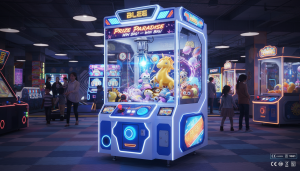
The BLEE kids’ claw machine is a notable example incorporating adjustable settings for claw force and joystick resistance, enabling therapists to create measurable, progressive fine motor challenges aligned with OT standards.