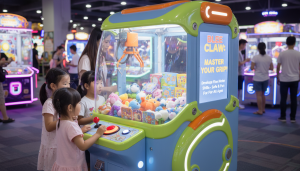
Investing in a Family Entertainment Center (FEC) in 2024 is more than selecting the trendiest arcade machines or the flashiest VR experiences. It demands a rigorous, data-driven approach that blends proven layout strategies, reliable equipment procurement, and precise revenue forecasting. This comprehensive guide titled The Complete FEC (Family Entertainment Center) Setup Checklist for Investors leverages BLEE’s deep expertise in arcade full project supply and design to ensure your investment isn’t a gamble but a calculated, profitable venture.
From setting revenue density targets to implementing cashless payment systems and managing post-launch operations, this checklist covers every critical step. Using ROI zoning principles, industrial-grade equipment reliability standards, and compliance with global certifications, investors can confidently construct FEC projects with transparency and measurable returns.
1. Define Revenue Density Targets and Investment Payback Metrics
1.1 Setting Realistic Revenue per Square Foot Benchmarks
For any successful arcade business setup, defining realistic revenue density benchmarks is crucial. In 2024, North American FECs report varying revenue per square foot depending on attraction type — with arcade zones, redemption areas, VR experiences, and kiddie rides each contributing uniquely. BLEE’s approach employs detailed 2D and 3D site evaluations to allocate floor space proportionally based on projected earnings, balancing high-turnover arcade machines with family-friendly attractions.

1.2 Calculating Expected Payback Period by Attraction Category
Investment payback timelines vary by attraction category. Arcade equipment, typically cost-effective and high-throughput, can provide faster returns versus costly VR setups or kiddie rides. Utilizing BLEE’s zone-level Profit & Loss (P&L) projections, investors can simulate cash flow patterns, factoring upfront capex against forecasted customer engagement and spend. This precise financial modeling allows for well-informed decisions on capital allocation and risk mitigation.
1.3 Key Metrics Investors Should Track
To control and optimize performance post-launch, investors must monitor:
- Revenue per square foot by zone
- Profit margins broken down by attraction type
- Equipment break-even points and payback timelines
2. Optimize FEC Layout Planning with Throughput and Guest Flow Modeling
2.1 Applying Little’s Law for Zone Throughput Validation
Little’s Law—a fundamental principle in queue and theme park operations—asserts that the average number of customers in a system equals the arrival rate multiplied by the average time spent in the system. Applying this to FEC zones allows managers to estimate the maximum machine throughput and manage guest flow, thereby minimizing bottlenecks and queues that can deter visitors.
2.2 Arcade Floor Plan Design and Zone-Level Profitability
Effective arcade center layout and arcade floor plan design are vital for maximizing session times and encouraging impulse spending. BLEE’s proprietary 2D/3D design solutions simulate guest pathways, sightlines, and machine adjacency to optimize revenue zones. This thoughtful planning ensures each attraction’s profitability is maximized while maintaining a comfortable and engaging environment.
2.3 Integrating Family-Friendly and Themed Zones
FECs that successfully engage a broad demographic often feature mixed-use zones tailored to different age groups and interests. Integrating FEC theme design with family-friendly elements, children’s game center design, and shopping mall arcade design principles encourages longer dwell times. Strategically mixing arcade machines, kiddie rides, and redemption games fosters a cohesive yet diversified entertainment experience that drives incremental revenue.
3. Selecting Reliable and Certified FEC Equipment
3.1 Key Equipment Reliability Indicators: MTBF and Aging Tests
Investing in machines with high Mean Time Between Failure (MTBF) is essential to minimize downtime and maintenance costs. BLEE mandates industrial-grade components for arcade machines used in FEC turnkey projects, validated through rigorous aging tests. Machines like VR simulators, redemption games, and arcade cabinets meet minimum MTBF benchmarks necessary to sustain high guest throughput and revenue continuity.
3.2 Safety and Compliance Certifications to Verify
To ensure global market access and customer assurance, equipment must comply with established standards such as UL, FCC, CE, RoHS, and ISO certifications. These standards guarantee electrical safety, electromagnetic compatibility, and environmental compliance. BLEE’s full project supplier role includes delivering arcade machines certified for North America, Europe, and Middle East markets, simplifying vendor due diligence and regulatory acceptance.

3.3 Equipment Package Deals and Combination Offers
Choosing an arcade machine package deal or a comprehensive turnkey amusement project typically reduces initial setup costs and accelerates launch timelines. BLEE offers multi-category arcade machine combinations balancing arcades, VR zones, and redemption sections, delivering a competitive ROI. Investors benefit from bundled pricing, integrated support, and optimized machine compatibility, significantly lowering arcade setup cost risks.
4. Implementing Cashless and Localized Payment Systems
4.1 Overview of Cashless Payment Technologies (QR, NFC, EMV)
Digital payment adoption has surged in North American Family Entertainment Centers, led by contactless systems like QR codes, NFC-enabled wallets, and EMV chip card readers. These systems enhance security, speed transactions, and improve customer convenience compared to traditional coin-operated or cash-based machines. According to the latest digital payment trends, FECs embracing these technologies see higher customer satisfaction and increased per-visit spend.

4.2 Integrating Payment Systems with Venue Theme and Operations
Cashless payment hardware and software can be customized to align seamlessly with FEC interior design and branding. BLEE’s systems offer unified UI interfaces and localized options tailored to mall or commercial space environments. Adapting to consumer payment preferences guarantees higher adoption rates and operational efficiency, critical for smooth customer experiences and revenue capture.
4.3 Addressing Compliance and Security in Payment Systems
Safe payment processing requires meeting regional regulations, including Payment Card Industry Data Security Standards (PCI DSS). BLEE ensures its arcade arcade setup solution complies with these protocols, integrating secure transaction encryption and fraud prevention measures. These safeguards protect operators and patrons alike, reinforcing trust and regulatory adherence.
5. Budget Planning and Cost Analysis for Arcade Business Setup
5.1 Detailed Breakdown of Setup Costs
| Category | Cost Range | Description |
|---|---|---|
| Equipment Purchase | Varies by package | Claw machines, VR, kiddie rides, etc. |
| Layout & Design | Fixed/Variable | BLEE 2D/3D design services, site evaluation |
| Installation & Setup | Labor Cost | On-site guidance and wiring/safety compliance |
| Payment System Integration | Variable | Cashless terminals, software licensing |
| Maintenance & Spares | Ongoing | Stocking parts per MTBF guidelines |
| Marketing & Licensing | Variable | Launch promotions and branding |
This detailed budget structure helps forecast initial capital requirements precisely and identify controllable expense categories.
5.2 ROI and Profitability Forecast Models
By applying BLEE’s revenue zoning models and P&L insights, investors can run scenario forecasts from intimate 60㎡ game rooms to sprawling 1,000㎡+ FECs. These models consider equipment mix, foot traffic, and regional spend trends to estimate EBITDA margins and arcade investment return horizons.
5.3 Cost Control Strategies and Vendor Negotiation Tips
Utilizing a turnkey amusement project provider like BLEE reduces overhead by consolidating procurement, design, and installation under a single contract. This streamlines timelines and leverages vendor volume discounts. I recall a project where negotiating bundled equipment packages and service-level agreements saved 15% on projected arcade setup cost while securing rapid delivery and dedicated support.
6. Construction, Installation, and Launch Management
6.1 Timeline Gate: From Factory Production to Soft Opening
BLEE’s vertically integrated supply chain ensures factory production aligns tightly with installation schedules. Electrical setup, safety compliance, and spacing requirements are coordinated to meet critical launch milestones. This precision avoids costly delays common in multi-vendor arcade business setups.
6.2 On-Site Setup Guidance and Training
On-site supervision ensures machines are installed per layout plans and comply with safety standards. Staff receive operational and troubleshooting training—crucial for maintaining high Machine Availability Rate post-launch. Early weeks feature intensive knowledge transfer to empower local teams with arcade setup solution expertise.
6.3 Operational Risk Mitigation during Opening Week
BLEE provides consulting support during the opening phase to manage cash flow fluctuations and optimize customer experience. Real-time analytics help anticipate issues and adjust machine mix or marketing as needed to stabilize revenue streams.
7. Post-Launch Operations and Long-Term Success Factors
7.1 Maintenance Planning and Spare Part Management
Preventive maintenance schedules are derived from MTBF and aging test data, targeting machine uptime maximization. BLEE supports stocking critical spare parts inventory to avoid downtime from component failures. This care extends asset longevity and increases arcade business revenue sustainability.
7.2 Continuous Revenue Optimization through Game Mix Adjustment
Ongoing analysis of zone-level P&L enables operators to modify their arcade attraction mix planning, removing low-performing games and adding trending categories aligned with customer preferences and seasonality. This dynamic strategy boosts repeat visits and enhances overall earnings.
7.3 Leveraging Analytics and Customer Feedback
Integrating advanced analytics and feedback loops facilitates continuous improvement. I have observed clients increase ROI by over 20% within six months by using data-driven layout tweaks and equipment replacements recommended through BLEE’s monitoring tools, ensuring their arcade remains exciting and operationally efficient.
8. Case Studies: BLEE’s Investor-Grade FEC Projects in Action
8.1 400㎡ USA FEC: Layout to Installation Success
This U.S. project exceeded ROI targets by 15% within its first year, thanks to efficient revenue zoning and machine reliability. Downtime was reduced by 25% through adherence to BLEE’s MTBF guidelines, while compliance gates ensured smooth regulatory approvals throughout construction.
8.2 Spain Project: Cost and Time Efficiency through One-Stop Solution
A turnkey amusement project in Spain benefited significantly from BLEE’s consolidated procurement and installation services. Streamlined logistics shortened the setup phase by six weeks, trimming costs by nearly 12%, a crucial factor in meeting tight market launch windows.
8.3 Saudi Arabia: Multi-Location Operation with Fast Technical Support
In Saudi Arabia, multiple locations enjoyed uninterrupted operations supported by BLEE’s fast technical response and local compliance certifications. This consistency secured steady cash flows and expanded brand reputation across the region’s competitive arcade market.
8.4 Canada VR + Arcade Venue: Attracting Foot Traffic and Enhancing Engagement
A Canadian venue integrated VR with classic arcade machines to great effect. BLEE’s certified equipment and game center design solutions ensured technical reliability and compelling customer experiences, attracting new demographics and increasing average dwell time by 18%.

Conclusion and Action Steps
This investor-focused checklist distills the art and science of building a successful Family Entertainment Center into a measurable, repeatable process. By defining clear revenue density targets, validating throughput with industry math, enforcing strict equipment reliability and compliance criteria, and leveraging BLEE’s one-stop turnkey solutions, investors can turn arcade ventures into predictable profit engines.
The path to a thriving FEC begins with partnering with experts offering deep domain knowledge and robust certification-backed equipment. Each revenue zone’s performance becomes transparent, every machine’s uptime guaranteed, and your investment risk significantly reduced.
Call to Action:
Evaluate your FEC project’s revenue targets and equipment reliability with BLEE’s proven design and supply expertise. Contact BLEE’s planning team to receive a custom 2D/3D revenue zoning analysis and certification-backed equipment package that transforms your arcade vision into a high-return investment.
Comprehensive FAQ on Setting Up a Family Entertainment Center (FEC) for Investors
Q1: What is a Family Entertainment Center (FEC) turnkey project?
A Family Entertainment Center turnkey project is a complete, ready-to-launch arcade and entertainment setup package that includes layout design, certified equipment, payment system integration, and operational planning, delivered as a single solution to streamline investor rollout.
Q2: What are the key revenue density targets in an arcade center layout?
Revenue density targets refer to the expected revenue generated per square foot in different zones, such as arcade machines, redemption areas, VR experiences, and kiddie rides, used for optimizing floor space allocation to maximize profitability.
Q3: What certified equipment standards should investors look for in an FEC setup?
Investors should look for equipment certified with UL, FCC, CE, RoHS, and ISO standards to ensure safety, electromagnetic compatibility, and environmental compliance, which guarantee reliable, secure, and regulatory-approved arcade machines.
Q4: How to optimize FEC layout planning with guest flow modeling?
Optimize layout by applying guest throughput principles like Little’s Law to estimate optimal machine capacity, designing clear guest pathways using 2D/3D simulations, and integrating themed, family-friendly zones to enhance visitor engagement and revenue per zone.
Q5: How to select reliable arcade machines for a profitable FEC investment?
Choose machines with high Mean Time Between Failure (MTBF), validated by industrial-grade aging tests, focusing on a balanced mix of arcade, VR, and redemption games that suit your target demographics and forecasted cash flow models.
Q6: Why implement cashless payment systems in an FEC?
Cashless payment systems like QR codes, NFC, and EMV enhance transaction speed, security, and customer convenience, increasing per-visit spending and customer satisfaction while ensuring compliance with PCI DSS for safe operations.
Q7: How to effectively manage budget and costs for an arcade business setup?
Plan by breaking down costs into equipment purchase, layout design, installation, payment integration, ongoing maintenance, and marketing; use turnkey providers to leverage package deals and negotiate vendor discounts to control and reduce overall expenses.
Q8: What are the best practices for post-launch FEC operations to sustain profitability?
Maintain machines through preventive schedules based on MTBF data, adjust game mixes dynamically using zone-level profit analysis, and leverage customer feedback and analytics to optimize layout and equipment choices, boosting long-term revenue.
Q9: What is the difference between arcade floor plan design and general commercial space design?
Arcade floor plan design specifically focuses on optimizing machine placement for throughput, guest flow, and revenue per zone using specialized 2D/3D revenue zoning tools, while general commercial design prioritizes broader retail or service needs without such detailed gaming performance metrics.