TL;DR
Import arcade machines from China correctly and the container keeps moving. It comes down to three checks. First, the HS code: coin or card operated amusement machines sit under 9504.30, not under general machinery. Second, the destination rules: the EU needs CE marking with a Declaration of Conformity, the US needs FCC Part 15 compliance for the electronics and a recognised safety standard such as UL 62368-1. Third, the paperwork: commercial invoice, packing list, bill of lading, certificate of origin, and a declaration of conformity. Get those three right and clearance is routine. Get the HS code wrong and you pay the wrong duty, or the shipment sits in a bonding warehouse while a broker argues with customs.
1. HS Code First When You Import Arcade Machines from China
The HS code decides duty rate, inspection risk, and which documents customs will demand. It is the first thing a broker asks for.
Why 9504.30 Covers Most Machines
Heading 9504 covers video game consoles and machines, table or parlour games, and amusement machines operated by coins, banknotes, bank cards or tokens. Subheading 9504.30 is the one that covers coin or card operated games.
That covers claw machines, basketball and boxing machines, racing cabinets, shooting games, kiddie rides with a coin mechanism, and arcade cabinets running a multigame board. If a customer inserts a coin, a note, a card or a token to play, 9504.30 is the starting point.
Where Classification Goes Wrong
Three mistakes repeat in arcade machine imports.
- Declaring a machine as furniture. A cabinet looks like furniture, but it is a game machine. The wrong heading changes the duty rate and can trigger a reclassification later.
- Declaring a machine as a toy. Toys carry their own rules, including age labelling and, in the US, children’s product requirements. An arcade machine sold to a venue is not a toy.
- Splitting the shipment incorrectly. Machines and spare parts in one container can need separate lines. Parts and accessories are usually classified differently from complete machines.
When a classification is genuinely unclear, request a written ruling from the destination customs authority before shipping. A ruling costs less than a reclassification.
2. The EU Route: CE Marking and the Declaration of Conformity
A CE mark is not a sticker you add at the port. It is a claim that the machine meets the directives that apply to it, and it must be supported by a technical file.
Which Directives Apply
| Directive | Applies when | What it covers |
|---|---|---|
| Low Voltage Directive 2014/35/EU | Equipment rated 50–1,000 V AC | Electrical safety of the machine |
| EMC Directive 2014/30/EU | Any equipment that may emit or be affected by electromagnetic disturbance | Emissions and immunity |
| RoHS 2011/65/EU | Electrical and electronic equipment | Restricted substances |
| WEEE 2012/19/EU | Electrical and electronic equipment placed on the market | Take-back and recycling obligations |
The Low Voltage Directive applies because an arcade machine runs on mains voltage. The EMC Directive applies to the control electronics, the motor drives, and the display. Both are normally demonstrated through test reports from an accredited lab.
What the Declaration of Conformity Must Contain
The EU Declaration of Conformity is a document the manufacturer signs. It must identify the product, list the directives applied, reference the standards used, and name the responsible person in the EU. Under the EMC Directive, the manufacturer and importer must keep that declaration for 10 years after the equipment is placed on the market.
Ask your supplier for the actual declaration and the test reports behind it. A certificate of a component inside the machine is not a declaration for the machine.
3. The US Route: FCC, Safety, and the Children’s Question
The US does not use CE marking. It uses a set of separate requirements, each checked by a different party. If you import arcade machines from China into the US, expect this route rather than a CE file.
FCC Part 15 for the Electronics
Arcade machines contain switching power supplies, motor controllers and displays, all of which can radiate radio frequency energy. Under FCC rules those are unintentional radiators governed by Part 15 Subpart B.
In practice this means the machine needs to be tested, and the importer needs the test report and the supplier’s compliance statement. Wireless features, such as a Bluetooth credit reader, move the product into intentional radiator rules and require additional authorisation.
Safety Certification
There is no single federal safety certificate for arcade machines in the US. In practice, venues, insurers and electrical inspectors expect a recognised mark, and UL 62368-1 is the safety standard normally cited for audio and video equipment of this type. Some suppliers certify to UL, others to ETL or CSA marks under the same standard.
Confirm which mark the machine carries, and in whose name it was issued. A mark issued to a component supplier does not cover the assembled machine.
If the Machine Is Sold for Children
Kiddie rides and small children’s amusements can fall under children’s product rules, including a Children’s Product Certificate. This is a separate obligation from electrical safety, and it is the one most often missed on kiddie ride imports.
4. Voltage, Plug and Frequency
A machine built for 220 V will not run correctly on a 120 V supply. This is a manufacturing decision made before shipment, not an adapter problem at the venue. It is also the detail most often missed when buyers import arcade machines from China on price alone.
| Market | Voltage and frequency | Plug type |
|---|---|---|
| United States | 120 V / 60 Hz | NEMA 5-15 |
| Canada | 120 V / 60 Hz | NEMA 5-15 |
| European Union | 230 V / 50 Hz | Schuko (CEE 7/7) or CEE 7/4 |
| United Kingdom | 230 V / 50 Hz | BS 1363 |
| Australia | 230 V / 50 Hz | AS/NZS 3112 |
| Japan | 100 V / 50–60 Hz | NEMA 1-15 |
Two practical points follow. First, state the destination voltage in the purchase order, because a 60 Hz machine on a 50 Hz supply can run at the wrong speed. Second, ask for the plug type to be fitted at the factory. Field rewiring of imported machines creates a liability that no saving justifies.
5. FOB, CIF or DDP: Who Actually Clears Customs
The Incoterm decides where your responsibility starts. It also decides who is the importer of record at destination, which matters far more than the freight number.
What Each Term Includes
| Term | Seller pays | Buyer pays | Importer of record |
|---|---|---|---|
| EXW | Nothing beyond the factory gate | Everything | Buyer |
| FOB | Export clearance and loading | Ocean freight, insurance, duty, destination clearance | Buyer |
| CIF | Freight and insurance to the port | Duty, destination clearance, inland delivery | Buyer |
| DDP | Everything, including duty | Nothing | Seller, or a broker the seller nominates |
Why DDP Looks Attractive and Often Is Not
DDP feels safe on a first order because the supplier handles everything. It creates two problems.
First, the importer of record is not you. That breaks the paper trail you need to recover VAT or sales tax, and it complicates warranty claims later.
Second, when a supplier undervalues a shipment to reduce duty, the liability sits with the importer of record. If that is the supplier’s broker, you inherit the consequence with no visibility into what was declared.
What to Write in the Purchase Order
Name the port, not just the three letters. “FOB Shenzhen” is a term. “FOB” alone is not.
Then add the four items the factory configures at production: voltage, frequency, plug type, and the language of the manual and safety labels. Changing any of them after the machines are built costs more than the parts themselves.
Which Term Suits a First Order
Most first-time buyers are best served by FOB plus their own forwarder. You see the freight cost, you control the broker, and the import record lands in your name. Move to CIF only when the supplier’s forwarder is genuinely cheaper, and treat DDP as a convenience for sample orders rather than containers.
6. Six Documents for Any Arcade Machine Import
Customs clearance stalls for missing paper, not for missing machines. That is the pattern behind most delayed arcade machine imports. Assemble these before the container sails.
| Document | Issued by | Purpose |
|---|---|---|
| Commercial invoice | Supplier | Declares value, HS code, terms of sale |
| Packing list | Supplier | Lists cartons, weights and dimensions |
| Bill of lading | Freight forwarder | Contract of carriage and release document |
| Certificate of origin | Chamber of commerce or supplier | Establishes origin for duty and trade measures |
| Declaration of conformity | Manufacturer | CE route, or the FCC compliance statement for the US |
| Fumigation or ISPM 15 mark | Packaging supplier | Required for solid wood packing material |
Two Documents People Forget
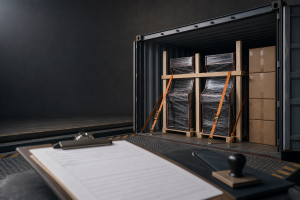
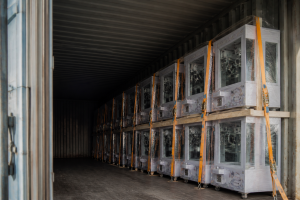
The ISPM 15 mark. If the machine is braced with solid wood inside the container, that wood must be heat treated or fumigated and stamped. Unmarked wood can be refused or fumigated at destination at the importer’s cost.
The insurance certificate. Not a customs document, but the cheapest line item in the file and the one that matters when a 380 W boxing machine arrives with a cracked display.
7. Common Causes of Delay
Most of these appear when buyers import arcade machines from China for the first time, and let the supplier choose the terms.
| Delay | Cause | Prevention |
|---|---|---|
| Held for valuation | Invoice value far below market | Declare the transaction value with freight terms stated |
| Reclassified | Wrong HS heading | Confirm 9504.30 and put it on the invoice |
| Missing CE file | No declaration for the finished machine | Request the DoC and test reports before deposit |
| Wood packing refused | No ISPM 15 mark | Specify treated wood in the order |
| Electrical inspection fail | No recognised safety mark | Confirm the mark and its holder before shipping |
8. FAQ
What HS code do arcade machines use?
Coin, note, card or token operated amusement machines are classified under heading 9504, subheading 9504.30. Spare parts and accessories are usually classified under different headings, so a mixed container may need more than one invoice line.
Do arcade machines need CE marking?
Yes, if they are placed on the EU market. An arcade machine runs on mains voltage and contains control electronics, so the Low Voltage Directive 2014/35/EU and the EMC Directive 2014/30/EU normally apply, supported by a Declaration of Conformity and test reports.
Is FCC certification required for arcade machines in the US?
Arcade machines contain power supplies and motor drives that can radiate radio frequency energy, so they fall under FCC Part 15 Subpart B as unintentional radiators. The importer should hold a test report and the supplier’s compliance statement. Wireless features add further requirements.
What is the difference between a CE certificate and a Declaration of Conformity?
A test report shows that a sample passed a standard. A Declaration of Conformity is the manufacturer’s signed statement that the product meets the applicable directives, and it is the document customs and market surveillance actually ask for. One does not replace the other.
Can I import 220V machines into the US?
Not without a step-down transformer per machine, which is a poor solution for a venue. Specify 120 V / 60 Hz at the order stage. Frequency matters as much as voltage, because a 50 Hz machine on a 60 Hz supply can run fast.
Who is responsible for CE compliance, the factory or the importer?
The manufacturer draws up the Declaration of Conformity. The importer must verify it exists, keep a copy, and ensure the EU responsible person is named. When customs or market surveillance asks, the importer is the party who must produce the file.
Do I need a customs broker to import arcade machines from China?
In most markets you can clear goods yourself, but a broker is worth the fee on a first container. The broker knows which documents your port demands and how to correct a classification before it becomes a detention. Once your paperwork is stable, a broker is optional.
How long should I keep import documents?
Keep the commercial documents for your own tax records, and keep the Declaration of Conformity for at least 10 years after the equipment is placed on the EU market, which is the retention period set by the EMC Directive.
9. Bottom Line
Importing arcade machines from China is a documentation exercise more than a technical one. Confirm 9504.30, confirm the destination’s marking route, and collect the six documents before the container leaves. Everything else is a supplier conversation, and a good supplier answers these questions before you ask.
Next Step
If you are planning a container, send the destination country and the machine list. We will return the HS code line by line, the voltage and plug configuration, and the document pack your broker will need.
Related pages: Arcade Machines · Basketball Game Machine · Claw Machine · Kiddie Rides · Spare Parts · Power Supply
References
- World Customs Organization, HS heading 9504: video game consoles and machines, articles for funfair, table or parlour games: https://www.wcotradetools.org/
- EUR-Lex, Low Voltage Directive 2014/35/EU: https://eur-lex.europa.eu/eli/dir/2014/35/oj
- EUR-Lex, EMC Directive 2014/30/EU: https://eur-lex.europa.eu/eli/dir/2014/30/oj
- U.S. Code of Federal Regulations, Title 47 Part 15, Radio Frequency Devices: https://www.govinfo.gov/content/pkg/CFR-2017-title47-vol1/pdf/CFR-2017-title47-vol1-part15.pdf
- UL Solutions, UL 62368-1 audio/video and information technology equipment safety standard: https://www.ul.com/