
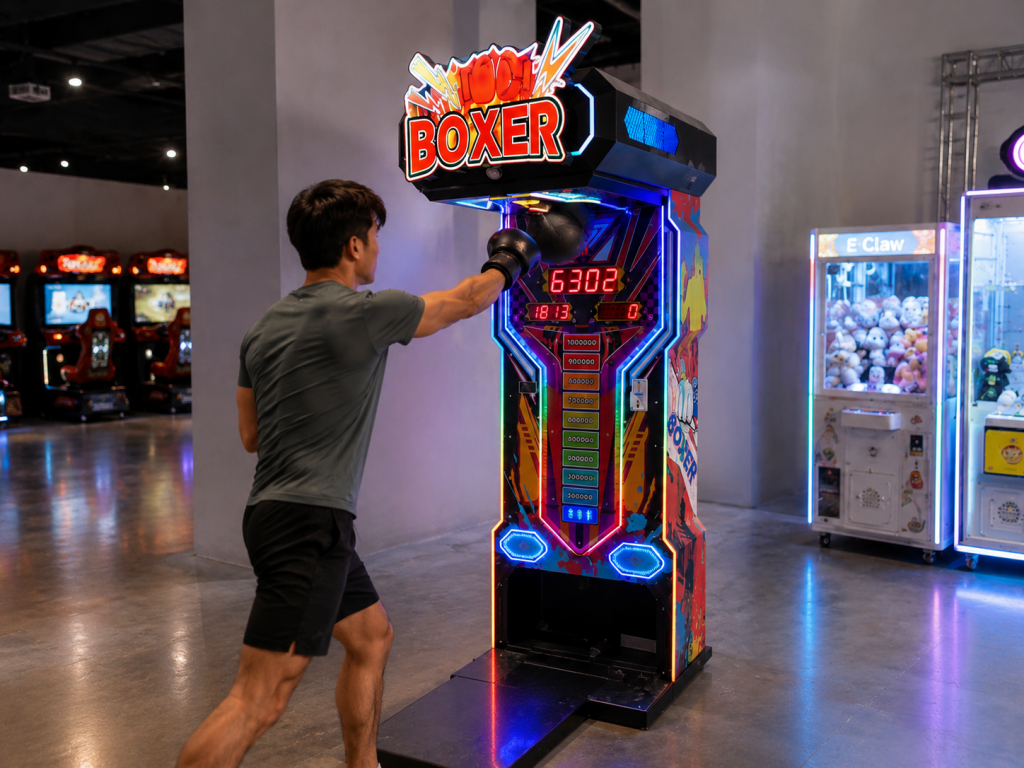
An arcade boxing machine gives players an immediate physical challenge with one simple goal: hit the target and see the score. The combination of movement, sound, illuminated scoring, and instant feedback creates a short but engaging experience that is easy for new players to understand. Unlike games that require several rounds of learning, a boxing challenge can attract customers within seconds and quickly turn one attempt into friendly competition.
Why Immediate Feedback Matters
Fast feedback is one of the strongest features of a physical challenge game. After each attempt, players want to know how well they performed and whether their score was better than the previous round.
A clear digital display makes that result easy to understand. When the score appears immediately after the strike, players can connect their physical action directly with the outcome.
This interaction is especially effective in busy entertainment venues. Customers may not want to spend several minutes learning complicated controls, but they can understand a simple strength challenge almost instantly.
For operators, this makes the machine suitable for locations where visitors move frequently between different attractions.
How an Arcade Boxing Machine Builds Competition
Physical competition becomes more interesting when other people can easily see the result. A visible score transforms a single-player action into a group activity.
Friends often watch one person make an attempt and immediately start comparing results. Someone may want to beat the current score, while another may try to improve a previous personal record.
This creates a natural cycle of play without requiring staff to organize the competition.
A Boxing Strength Game Encourages Repeat Attempts
A boxing strength game gives players a clear reason to try again. If the first score feels lower than expected, the player may adjust stance, timing, or technique before making another attempt.
That repeat behavior is important in commercial entertainment environments because the experience remains simple while still offering a personal goal.
Each round is short, but the possibility of achieving a better result keeps the interaction interesting.
Why the Machine Attracts Attention From a Distance
Visual presence matters in an arcade. Tall cabinets, illuminated signs, large score displays, and bright outlines help customers recognize a machine before they reach it.
The prominent BOXER-style header on this type of equipment communicates the gameplay quickly. Even a customer who has never used the machine before can understand that it is related to punching, strength, and score competition.
The vertical cabinet also helps the product stand out among lower machines.
A strong visual structure can be especially useful near entrances, central game zones, or busy walkways where operators want to attract attention from several directions.
Choosing the Right Area in a Venue
Physical machines need slightly different placement considerations from traditional screen-based games.
Players require enough room to stand naturally and make a safe punching movement. The area directly in front of the machine should therefore remain clear.
Suitable locations can include arcade entrances, open spaces beside major game zones, bowling centers, billiard venues, shopping mall entertainment areas, and leisure centers.
The machine should be visible without creating an obstacle in the main traffic path.
An Arcade Punch Tester Works Well Near Group Activities
An arcade punch tester can perform particularly well near areas where customers naturally gather.
For example, players waiting for a bowling lane, friends standing near racing machines, or groups moving between prize games may use the boxing challenge as a quick additional activity.
Because each attempt is relatively short, the machine does not require customers to leave their group for a long period.
This helps the game fit naturally into social entertainment environments.
Adding Variety to the Equipment Mix
A balanced arcade should not rely on only one style of gameplay.
Crane machines and redemption games provide prize-focused entertainment. Racing cabinets deliver longer competitive sessions. A punching power machine introduces a more direct physical interaction.
This contrast can make the venue feel more varied.
Customers who may not be interested in collecting prizes or playing traditional video games can still enjoy a quick strength challenge.
For operators planning a mixed game floor, physical equipment can therefore provide another type of engagement without requiring a complicated playing process.
Clear Scoring Improves the Experience
A punch score machine depends heavily on understandable results.
Players should immediately recognize their score after making an attempt. If scoring information is difficult to read, much of the competitive value is lost.
Large illuminated numbers and visible ranking or strength levels make it easier for both players and spectators to follow the result.
This also increases the social effect. A group does not need to stand directly beside the screen to understand whether someone achieved a strong result.
Why Short Games Can Create Strong Reactions
Long gameplay is not always necessary to create memorable entertainment.
A short physical challenge can generate excitement because the result arrives quickly. The player prepares, makes one strong movement, and immediately sees the outcome.
Friends may react to the score, laugh, challenge each other, or encourage another attempt.
That concentration of action and reaction makes the game suitable for venues where customers want quick entertainment between other activities.
Final Thoughts
Physical challenge games continue to work because they combine simple rules with visible results and natural social competition. Their short play cycle makes them easy to approach, while score comparison encourages customers to participate more than once. For operators looking to add a recognizable, energetic attraction to a commercial game area, an arcade boxing machine can provide a practical combination of visual impact, physical interaction, and repeat-play potential.