
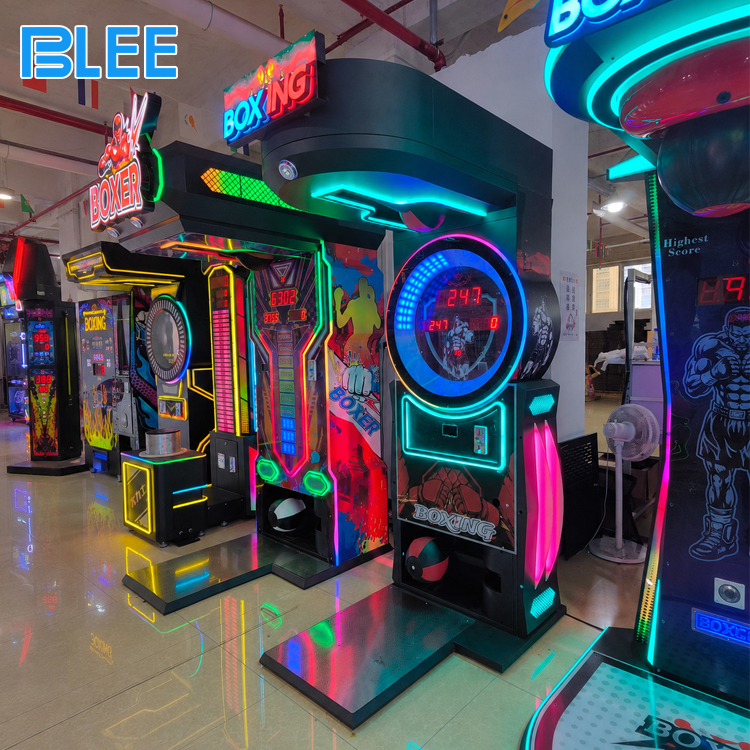
A punch and kick arcade machine brings two forms of physical interaction into one fast and easy-to-understand amusement experience. Players can test their power through direct movement while receiving an immediate digital score after each attempt. Compared with traditional screen-based games, this type of equipment creates a more active challenge and naturally attracts attention from nearby customers. Its illuminated circular display, tall cabinet, and visible strike areas also make the machine easy to recognize across a busy game floor.
Why a Boxing Challenge Machine Attracts More Players
Many boxing games focus on only one punching action. A combined punch-and-kick format gives players another way to participate and makes the experience feel more varied.
The upper target provides the familiar boxing-style challenge, while the lower interaction area adds another physical element. Players can compare different attempts and create their own small competitions with friends.
This simple structure is useful in commercial entertainment environments because new customers can quickly understand the objective. There is no complicated control panel to learn. Players make an attempt, see the result, and decide whether they want to improve it.
That fast cycle can make the equipment suitable for arcades, family entertainment centers, bowling venues, leisure centers, shopping mall game zones, and other social entertainment locations.
How a Punch and Kick Arcade Machine Creates Competition
Visible scoring is an important part of the experience. When a player completes a challenge, the digital result provides an immediate target for the next person.
A group of friends may begin with one casual attempt. Once a score appears, however, the activity can quickly become competitive. Another player may want to beat that number, while the original player may return for a second try.
This behavior is valuable because competition develops naturally without requiring staff supervision or complicated tournament settings.
A Boxing Strength Tester Makes Results Easy to Compare
A boxing strength tester works best when the result is clear enough for both the player and nearby spectators to understand.
The circular illuminated display on this type of cabinet creates a strong visual focal point. Large numbers and surrounding lighting help communicate the outcome quickly.
That visibility matters in group environments. Customers standing nearby can follow the result even if they are not currently playing.
When spectators understand what is happening, they are more likely to become participants themselves.
Physical Interaction Can Diversify the Game Floor
Modern entertainment centers often contain many screen-based attractions. Racing games, shooting cabinets, video machines, and redemption equipment can dominate the space.
Adding a physical arcade game changes the type of interaction available to customers.
Instead of controlling a character or vehicle, players use their own movement to produce the result. This creates a different feeling and can appeal to visitors who prefer short physical challenges.
A varied equipment mix can also help operators serve different groups. Some customers may enjoy crane machines and prize games, while others prefer competitive activities based on reaction or strength.
Short Rounds Encourage Another Attempt
One advantage of a strength challenge game is that a complete round does not need to take several minutes.
The player can approach, make an attempt, view the score, and finish quickly. Because the interaction is short, another customer can join without a long wait.
Short rounds also make repeat attempts more natural.
A player who is slightly disappointed with the first result may immediately try again. Friends may also take turns trying to set the highest score within the group.
Creating a Strong Visual Attraction
Machine appearance matters before the customer even understands the gameplay.
The large circular display, illuminated cabinet edges, overhead BOXING sign, and vertical structure give this style of machine a noticeable presence inside an arcade.
Lighting should attract attention without making the interface difficult to understand. The most important interaction areas and score display should remain visually clear.
The vertical design can also help the machine stand out beside lower cabinets. This makes it useful in areas where operators want to create a recognizable attraction without occupying an extremely large floor area.
Choosing the Right Position in a Venue
Placement should balance visibility with enough space for physical movement.
A commercial boxing game should have a clear area in front of the cabinet. Players need room to move naturally without interfering with customers walking past.
Open positions beside major game zones can work well. Operators can also consider placement near entrances, bowling areas, billiard zones, waiting spaces, or other locations where groups tend to gather.
The machine should remain visible from a reasonable distance, especially because its illuminated display is one of its strongest attraction features.
Why Social Play Matters
Physical challenge machines often become more entertaining when several people participate together.
One player performs the action while friends watch the score. The next player then has a clear number to beat. This creates an easy competitive rhythm without requiring complicated rules.
The reactions surrounding each attempt can also attract people who were not originally planning to play.
For operators, this spectator effect can help transform a single machine into a more active point within the venue.
Final Thoughts
Arcade operators increasingly need equipment that is easy to understand, visually noticeable, and capable of creating interaction between customers. Combining punching, kicking, instant scoring, and short rounds gives players several reasons to participate and try again. For venues seeking a physical attraction that offers more variety than a standard single-action boxing game, a punch and kick arcade machine can add competitive energy, visible activity, and a different form of entertainment to the overall game mix.