Why Your FEC Needs a dedicated VR Zone
The virtual reality arcade game market is projected to grow by 32.7% annually (2024-2029), making VR zones one of the most profitable investments for modern Family Entertainment Centers. A well-designed VR area doesn’t just attract players—it creates immersive experiences that drive repeat visits and significantly increase per-capita spending.
At BLEE, we’ve helped over 200 FECs worldwide design revenue-generating VR zones. Here’s our proven blueprint for success.
1. Strategic Placement & Visibility
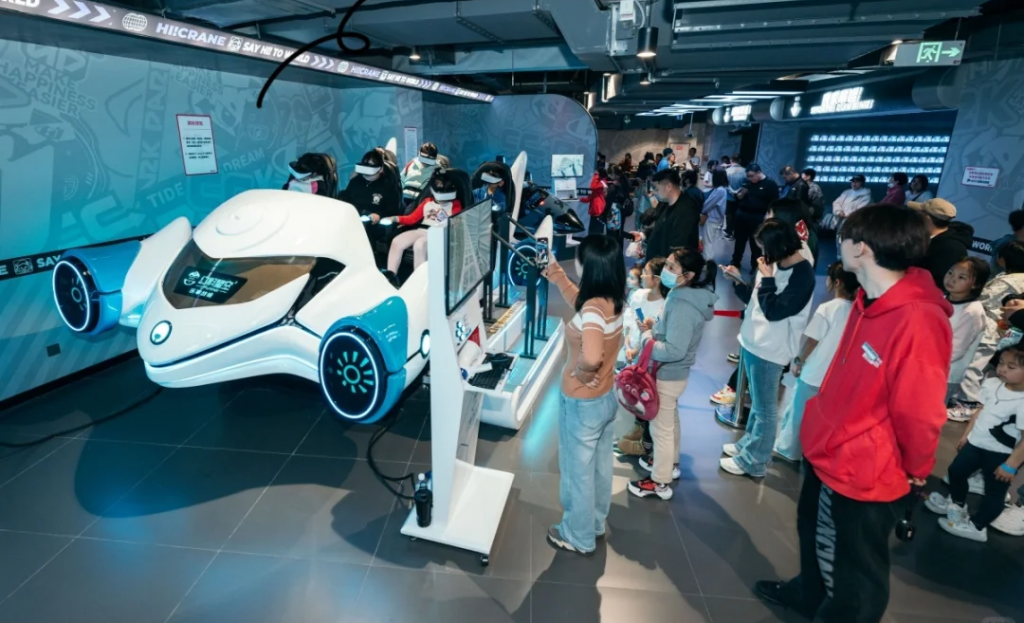
The Golden Rule: Your VR zone should be visible from the entrance but placed deeper inside to pull traffic through your entire facility.
- Sightlines: Ensure the spectacular motion of motion simulator arcade machines can be seen from entry points
- Sound Management: Use directional speakers to create excitement without overwhelming other areas
- Lighting: Employ dramatic lighting effects to make the zone feel like a destination
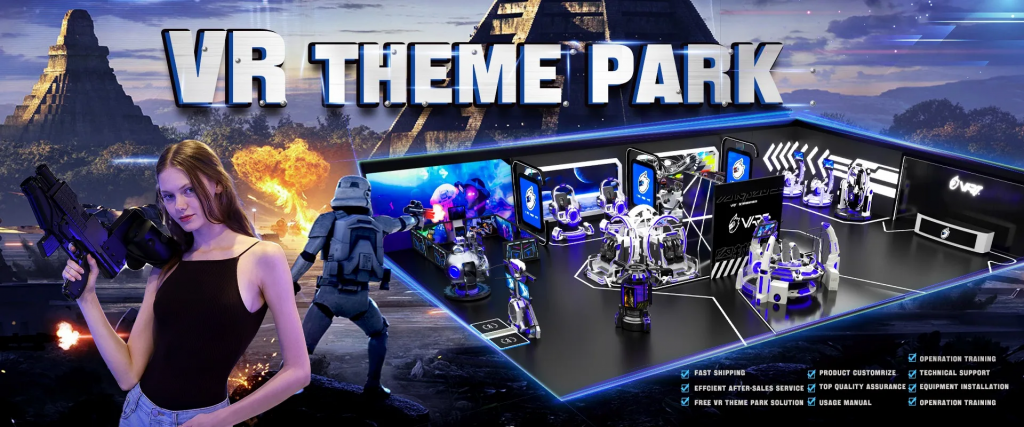
2. Optimized Layout for Maximum throughput
The 4-Zone Approach:
| Zone | Purpose | Equipment Examples |
|---|---|---|
| Entry Experience | Queue management & hype building | Preview screens, ticket kiosks |
| Active VR Area | Core gameplay | Free-roam VR systems, VR shooter games |
| Premium Stations | High-end experiences | Motion racing cockpits, 4D VR pods |
| Recovery Space | Social sharing & upsells | Seating, photo stations, merch displays |
Pro Tip: Allow 25-30 sqm per free-roam VR arena for comfortable movement and safety buffers.
📌 BLEE provides 3D layout design to optimize your VR zone planning.
3. Hardware Selection & Mix
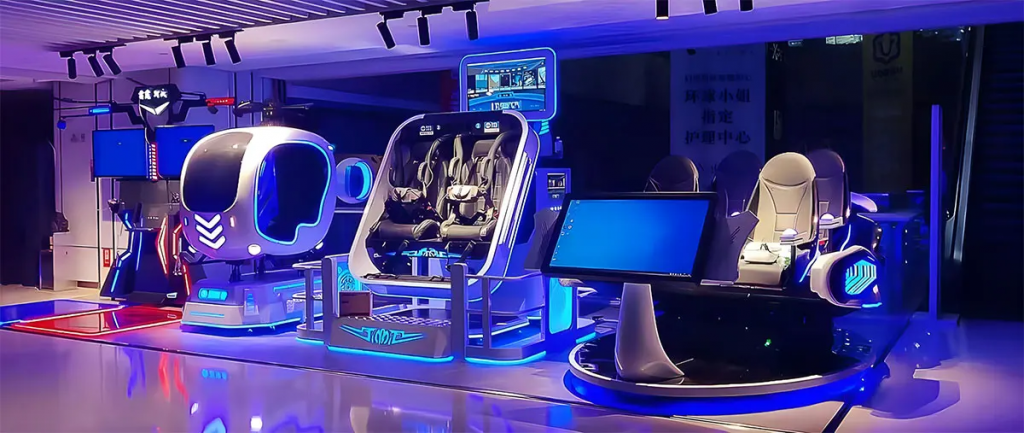
The Perfect VR Machine Blend:
- 40% Multiplayer Attractions (VR tactical games, team experiences)
- 30% Premium Single Stations (VR racing simulators, horror experiences)
- 20% Social/Shared Experiences (VR multiplayer cinema, social hubs)
- 10% Spectator Features (Viewing platforms, live feed displays)
Critical: Choose commercial-grade VR equipment specifically designed for high-throughput operations—consumer headsets will fail under arcade conditions.
📌 BLEE offers a wide range of VR arcade machines tailored to different audience needs and budgets.
4. Traffic Flow & Queue Management
Eliminate Bottlenecks:
- Pre-Game Prep Zones: Separate areas for equipment fitting and tutorials
- Timed Sessions: Implement booking systems to maximize capacity
- Transparent Queues: Design waiting areas that showcase the action
- Entertained Waiting: Use related interactive arcade games in queue lines
5. Theming & Atmosphere
Create an Immersive Environment:
- Architectural Elements: Portal-like entries, futuristic design cues
- Lighting Strategy: Dynamic LEDs that change with gameplay
- Sound Design: Zone-specific audio that doesn’t bleed into other areas
- Branding: Custom graphics that make your VR zone Instagram-worthy
6. Integration with Other Attractions
The Halo Effect: Position your VR zone to boost traffic to other profit centers:
- Place redemption games and claw machines near VR exit paths
- Locate food & beverage outlets adjacent to recovery areas
- Connect VR score data to ticket redemption systems for combined rewards
7. Safety & Accessibility
Non-Negotiable Considerations:
- Clear Sightlines: Staff must monitor all players simultaneously
- Floor Markings: Visual guides for play boundaries and walkways
- Ventilation: Enhanced airflow to prevent discomfort during active play
- ADA Compliance: Wheelchair-accessible stations and clear pathways
Why Partner with BLEE for Your VR Zone?
Turnkey VR Zone Solutions Include:
- 🎯 Custom Layout Planning: Optimized for your specific space and demographics
- 🎮 Curated Content Library: 100+ commercial VR titles with regular updates
- 🛠️ Commercial-Grade Hardware: Designed for thousands of hours of operation
- 📊 Management Systems: Real-time monitoring and revenue analytics
- 🌍 Global Support: 24/7 technical support and spare parts logistics
“BLEE’s VR zone design increased our revenue per square foot by 240% while reducing operational costs.”
— Sarah K., Infinity Fun World (Dubai)
Conclusion
Designing a successful VR Zone in your FEC requires the right balance of space, equipment, safety, and marketing. Done correctly, it becomes a star attraction that drives consistent foot traffic and profit.
👉 Partner with BLEE today to create a VR Zone that delivers unforgettable experiences and long-term business growth.
FAQ: Designing a VR Zone
Q1: How much space do I need for a VR Zone?
Small setups need 20–30㎡, while VR arenas may require 50–100㎡.
Q2: What VR games are most popular?
Racing simulators, VR shooters, and multiplayer arenas attract the most traffic.
Q3: Do VR machines require frequent maintenance?
No. Only routine cleaning and occasional calibration are needed.
Q4: Can I install VR attractions in a shopping mall?
Yes. Compact VR pods and simulators are perfect for malls.
Q5: What ROI can I expect from a VR Zone?
Most operators recover their investment in 3–15 months, depending on location and traffic.