
A compact VR arcade project should begin with the space itself rather than a fixed list of machines. For investors, arcade operators, or venue owners, a smaller floor area does not automatically mean a limited entertainment experience. What matters more is how the available space is organized, what types of VR attractions are combined, and whether customers can immediately understand how to enter, play, wait, and move through the venue.
This creates an interesting opportunity for businesses that may not have the budget or floor area for a large family entertainment center. Instead of trying to reproduce a full-scale arcade, a smaller venue can focus on a carefully selected group of VR experiences and build a clear identity around them.
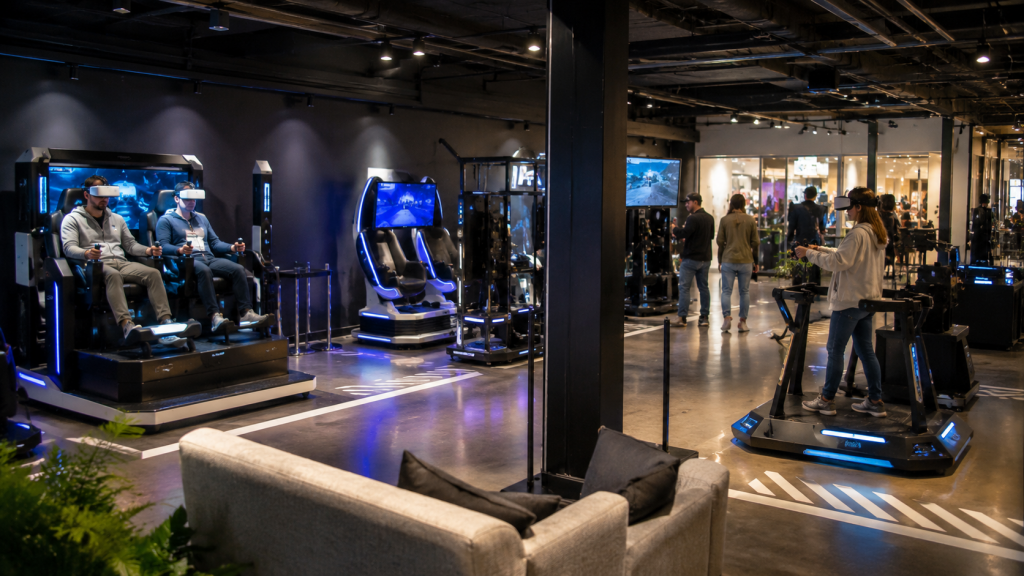
Why a Compact VR Arcade Can Be a Different Business Format
A compact VR arcade is not simply a large game center with fewer machines. Smaller venues have different priorities.
Every attraction needs to justify the space it occupies. A motion ride may provide strong visual impact, a racing simulator can encourage competition, and a multiplayer experience may attract groups who want to participate together.
The objective is to create enough variety without filling every available square meter. When equipment is selected with a clear purpose, even a relatively small VR entertainment zone can feel complete rather than crowded.
This format can suit shopping centers, cinema complexes, existing arcades, tourist areas, and mixed entertainment venues where a large amusement project would be difficult to install.
Start With Floor Area Before Choosing VR Machines
One of the most common mistakes in entertainment planning is selecting equipment before understanding the usable floor space.
Columns, entrances, electrical access, ceiling height, emergency routes, customer circulation, and maintenance areas can all affect the final layout. A machine may physically fit into a room but still create problems if customers have no comfortable place to wait or if active players block the main walkway.
A better VR game center setup begins by dividing the available area into practical zones.
The entrance should quickly communicate what the venue offers. High-impact attractions can be positioned where passing customers can see them, while longer immersive experiences can sit deeper inside the space. Enough clearance should also remain around each machine for safe operation and routine maintenance.
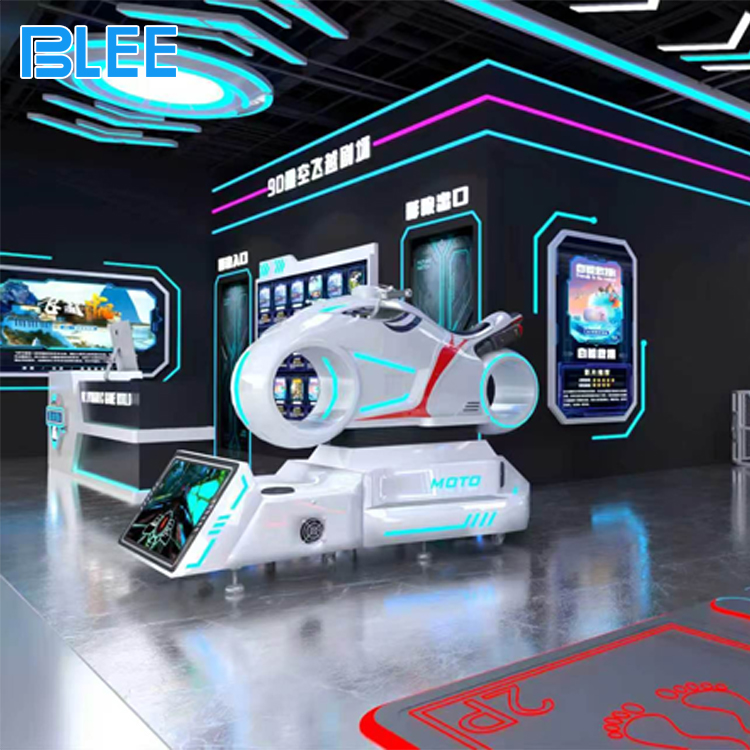
Custom VR Arcade Design Needs the Right Equipment Mix
Custom VR arcade design becomes especially important when several different VR products must work together in one limited area.
A venue filled entirely with similar seated simulators may look impressive from a product perspective but can feel repetitive to customers. A stronger mix might combine racing, shooting, motion simulation, interactive riding, and group attractions.
Different machines then serve different customer motivations.
Some people want competition. Others want immersion, physical movement, or an experience they can share with friends. By combining several play styles, a custom VR game center can appeal to a broader audience without relying on a large number of machines.
The target customer should influence this decision as well. A family-oriented location may require different products from a venue targeting teenagers, young adults, tourists, or corporate groups.
How a Compact VR Arcade Project Should Use Different Zones
Even a small venue benefits from clear zoning.
The first zone is attraction. Customers passing the entrance need an immediate visual reason to look inside.
The second is active play. Machines requiring more movement should have enough clearance so players feel comfortable without affecting nearby equipment.
The third is waiting and observation. VR experiences often attract spectators, especially when friends are playing together. Waiting customers should be able to watch without standing directly inside another machine’s operating area.
Finally, operators need service access. Staff may need to assist players, clean equipment, restart systems, or inspect machines. A layout that ignores these daily operating requirements may look good in a rendering but become difficult to manage after installation.
Good planning connects all four zones without making the venue feel artificially divided.
Small VR Game Centers Can Create Opportunities in Existing Venues
A small VR game center can be particularly useful when an existing commercial location has underused floor space.
A shopping mall may have a compact unit that is unsuitable for a traditional arcade. An established entertainment center may have an area that needs a new attraction. A cinema, bowling center, indoor playground, or leisure complex may also want to introduce VR without rebuilding the entire venue.
In these situations, a modular approach can make more sense than purchasing unrelated machines individually.
The operator can first define the available area and target audience, then select the number and type of machines that fit the site. If the local market responds well, the concept can later be expanded with additional equipment or a larger location.
This creates a more manageable entry point for buyers who are exploring the entertainment industry but are not ready to begin with a large-scale FEC.
From Available Space to a Tailored VR Game Center Setup
BLEE’s small-format VR solution is designed around this project-based approach. Instead of requiring every buyer to purchase the same equipment package, the combination of machines can be adjusted according to available floor area, venue type, target customers, and project positioning.
A tailored VR game center setup may include several complementary VR attractions together with entrance design, equipment placement, decorative elements, and circulation planning. This helps the individual machines feel like parts of one entertainment concept rather than unrelated products placed in the same room.
For operators comparing investment options, this changes the key question. Rather than asking only which VR machine is most popular, it becomes more useful to ask which combination of experiences makes sense for the actual location.
That is ultimately the value of a well-planned compact VR arcade project: using customization, equipment selection, and space planning together to turn a limited footprint into a coherent commercial entertainment experience.