Why Location-Based VR is Outperforming Traditional Entertainment
The global location-based VR market is projected to reach $12.3 billion by 2028, growing at 32.7% CAGR. While traditional arcades struggle with 18-22% profit margins, top VR parks are achieving 35-42% net margins through innovative business models.
As BLEE’s team has helped develop 140+ VR parks worldwide, we’ve identified the exact strategies that separate profitable operations from struggling ones. Here’s how to build a sustainable VR business.
The 4 Dominant VR Arcade Park Business Models
1. Pay-Per-Play Model (Most Common)
How It Works:
- Customers pay for individual experiences (5-15 minute sessions)
- Pricing tiers based on experience quality (Basic → Premium → Elite)
- Example Pricing:
- Basic VR: $12-18 per session
- Motion Simulators: $20-28 per session
- Free-Roam VR: $25-35 per session
Best For: High-footfall locations (malls, tourist areas)
BLEE Client Example: Dubai VR Zone achieved $1.2M annual revenue with 8 stations
2. Unlimited Play Pass Model
How It Works:
- Fixed-price unlimited play for 2-4 hours
- Tiered pricing (Child/Adult/Premium)
- Example Pricing:
- 2-hour pass: $39-49
- 4-hour pass: $59-69
- VIP pass (skip lines): +$20
Best For: Destination locations where visitors stay longer
BLEE Client Example: Tokyo VR Park increased average spend 47% after introducing unlimited passes
3. Membership & Subscription Model
How It Works:
- Monthly/quarterly membership for recurring revenue
- Exclusive benefits and discounts
- Example Pricing:
- Basic: $79/month (4 visits)
- Premium: $149/month (unlimited visits + guest passes)
- Family: $249/month (4 people)
Best For: Markets with strong local population base
BLEE Client Example: Miami VR World retains 63% of members beyond 6 months
4. Hybrid Model (Most Profitable)
How It Works:
- Combination of all revenue streams
- Typical Revenue Split:
- 55% Pay-per-play
- 25% Unlimited passes
- 15% Memberships
- 5% Merchandise/F&B
Best For: Established venues with diverse customer base
BLEE Client Example: Singapore VR Adventure generates $3.4M annually with hybrid approach
Revenue Stream Breakdown: Beyond VR Sessions
Successful VR parks generate 30-40% of revenue from secondary streams:
| Revenue Source | Contribution | Examples |
|---|---|---|
| Primary VR Sessions | 60-70% | Pay-per-play, packages |
| Food & Beverage | 15-20% | Themed drinks, VR-friendly snacks |
| Merchandise | 8-12% | Branded controllers, haptic apparel |
| Event Hosting | 10-15% | Birthday parties, corporate events |
| Content Licensing | 5-8% | Developer partnerships, exclusives |
Cost Structure & Investment Timeline
Initial Investment Breakdown ($300K-500K VR Park)
- VR Hardware & Software: 45-50%
- Location Build-Out: 25-30%
- Marketing & Launch: 10-12%
- Operating Reserve: 8-10%
Monthly Operating Costs ($25K-40K)
- Rent: $6,000-12,000
- Staff: $8,000-15,000 (4-6 employees)
- Content Updates: $1,500-3,000
- Utilities/Maintenance: $2,000-4,000
- Marketing: $2,000-5,000
Realistic ROI Timeline
- Months 1-3: 15-25% capacity (brand awareness phase)
- Months 4-6: 35-45% capacity (break-even point)
- Months 7-12: 50-65% capacity (profit generation)
- Year 2: 65-80% capacity (25-35% net margins)
5 Keys to VR Park Profitability
1. Throughput Optimization
- Target 85-90% session utilization during peak hours
- Implement virtual queuing to maximize capacity
- Staff Efficiency: 1 attendant per 5-6 active stations
2. Content Refresh Strategy
- Introduce 2-3 new experiences quarterly
- Rotate 15-20% of content annually
- Track popularity metrics to remove underperformers
3. Dynamic Pricing Implementation
- Surge pricing during weekends/holidays (+20-30%)
- Off-peak discounts (30-40% off weekdays)
- Group rates (15-25% discount for 4+ people)
4. Membership Program Design
- Offer exclusive member events (early access, tournaments)
- Provide personalized experiences (save progress, custom avatars)
- Create membership tiers with increasing benefits
5. Operational Excellence
- Preventive maintenance schedules to minimize downtime
- Staff cross-training on multiple positions
- Daily performance tracking against KPIs
BLEE’s Profit Optimization Platform
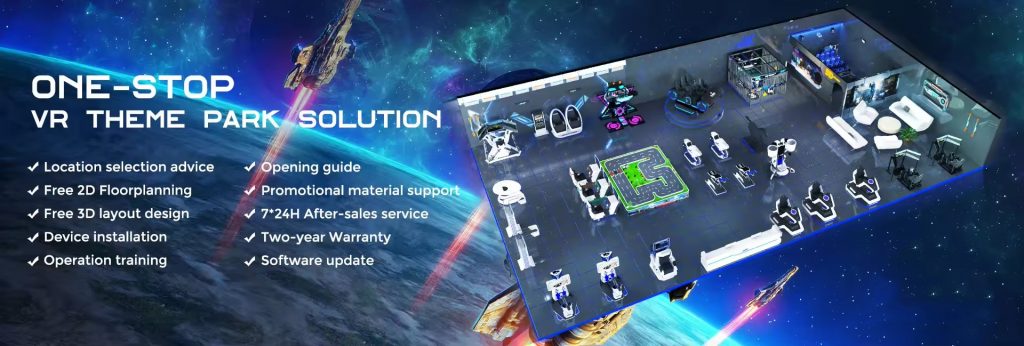
Our integrated solution includes:
- Revenue Management System: Dynamic pricing and capacity optimization
- Content Management: Automatic updates and performance analytics
- Maintenance Alerts: Predictive maintenance scheduling
- Customer CRM: Membership management and marketing automation
👉 Ready to start your VR arcade business? Contact BLEE today for a tailored VR Theme Park solution.