
Arcade Power Requirements for Voltage, Circuit Zoning, Cable Routes, Ventilation, and Site Preparation
Arcade power requirements should be confirmed before any machines are shipped or installed. A mixed entertainment venue may include claw machines, redemption games, basketball machines, boxing machines, racing simulators, kiddie rides, vending equipment, card systems, lighting, and network devices. Each product may use a different voltage, frequency, plug type, operating load, and cooling method.
Early preparation helps prevent overloaded circuits, inaccessible outlets, exposed cables, and expensive changes after equipment arrives. The machine supplier should provide accurate technical specifications, while a qualified local electrician should design and approve the electrical system according to local regulations.
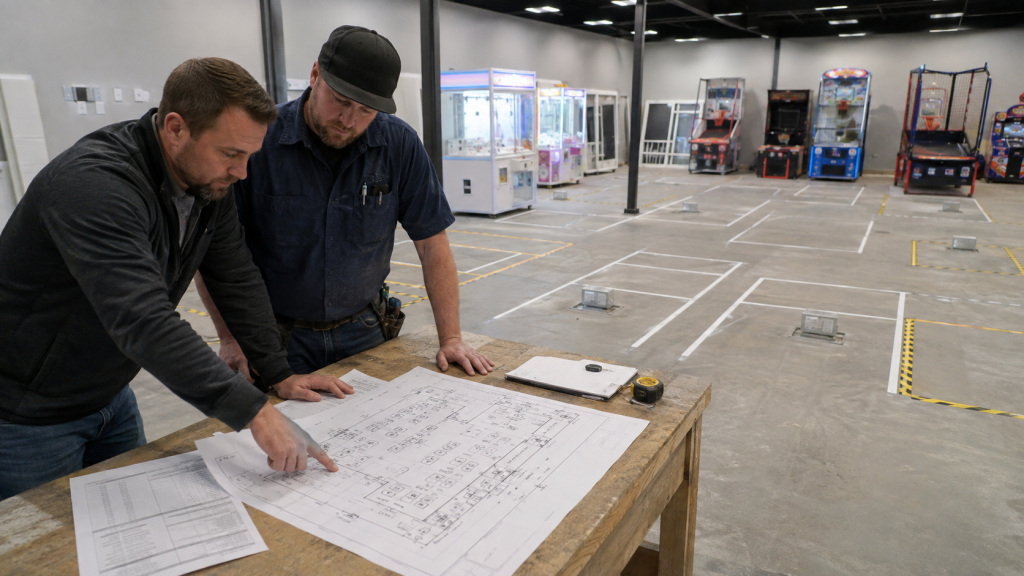
Review Arcade Electrical Requirements Before Delivery
Electrical preparation should begin after the equipment list and floor plan are confirmed. Mark the location of every machine, service door, payment panel, prize outlet, and customer walkway before deciding where power connections should be installed.
The plan should also include supporting systems such as card recharge stations, cash registers, routers, security cameras, background audio, signage, and emergency lighting. These systems are essential to daily operation and should not be connected without considering the total venue load.
Buyers should request electrical information for every machine before shipment. Do not estimate the required supply only from cabinet size or appearance.
Create a Machine Power Schedule
A machine power schedule gives the project manager and electrician a clear list of equipment to review. Each entry should include:
- Machine name
- Model number
- Quantity
- Rated voltage
- Electrical frequency
- Rated power
- Plug type
- Installation area
- Supplier notes
The schedule should be updated whenever the machine quantity, model, or layout changes. It can also be used during delivery inspection to confirm that the equipment matches the approved order.
Arcade machine power consumption should be checked using the nameplate, technical manual, and supplier documentation. Machines with similar dimensions may still have very different internal systems and operating loads.
How to Document Arcade Power Requirements
Different machine categories should be reviewed separately. Prize machines may use relatively simple motors, lighting, and payment devices, while racing simulators, VR equipment, sports games, and motion products may contain multiple screens, fans, speakers, motors, and control systems.
The electrical schedule should identify which machines need:
- Standard wall connections
- Dedicated circuits
- Transformers
- Voltage stabilizers
- Additional ventilation
- Special startup procedures
- Separate isolation switches
Avoid using one general estimate for the entire venue. Each machine model should be evaluated according to its actual specification.
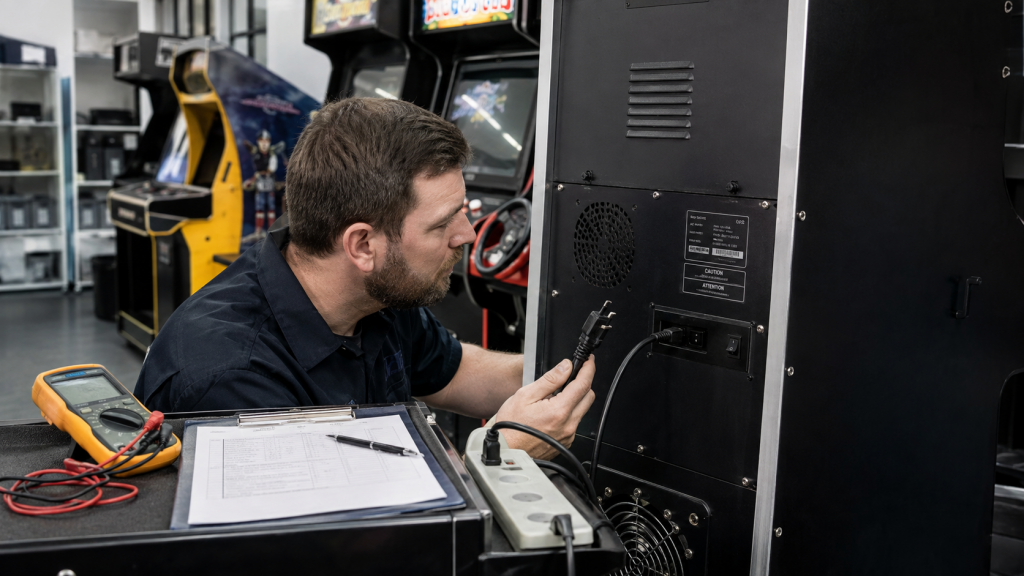
Divide the Venue into Electrical Zones
Game center electrical planning is easier when the venue is divided into logical operating zones. Possible areas include:
- Claw and prize machine zone
- Redemption game zone
- Basketball and boxing area
- Racing and simulator area
- Kiddie ride section
- Cashier and card system
- Lighting and signage
- Office and network equipment
Zoning allows one section to be isolated for maintenance without shutting down the entire venue. It also helps staff identify the affected area when a fault or breaker problem occurs.
High-demand equipment should not be concentrated in one section unless the distribution system has been designed for the combined load. The electrician should consider simultaneous startup and peak operating periods.
Confirm Voltage, Frequency, and Plug Type
International buyers must confirm the destination country, venue voltage, electrical frequency, and preferred plug standard before production.
A plug can sometimes be replaced, but the internal configuration must still match the local supply. A machine designed for one electrical standard should not be connected to another system based only on plug appearance.
The amusement equipment power supply information should be confirmed in writing for every model. Buyers should also ask whether the machine requires a transformer, stabilizer, or dedicated connection.
Final compatibility must be reviewed by the equipment supplier and a qualified local electrician before installation.
Plan Safe Cable Routes and Service Access
Power cables should not cross customer walkways or create trip hazards. Suitable wall routes, ceiling routes, protected floor channels, or commercial cable-management systems should be prepared before machines are positioned.
Outlets should remain accessible for inspection and maintenance. However, they should not interfere with cabinet placement, service doors, ventilation openings, or customer movement.
Leave enough space behind or beside the machines for technical access. Cables should be kept away from moving mechanisms, sharp cabinet edges, water sources, and hot surfaces.
Equipment that may be moved for cleaning or layout changes also needs a practical connection method that remains protected during normal operation.
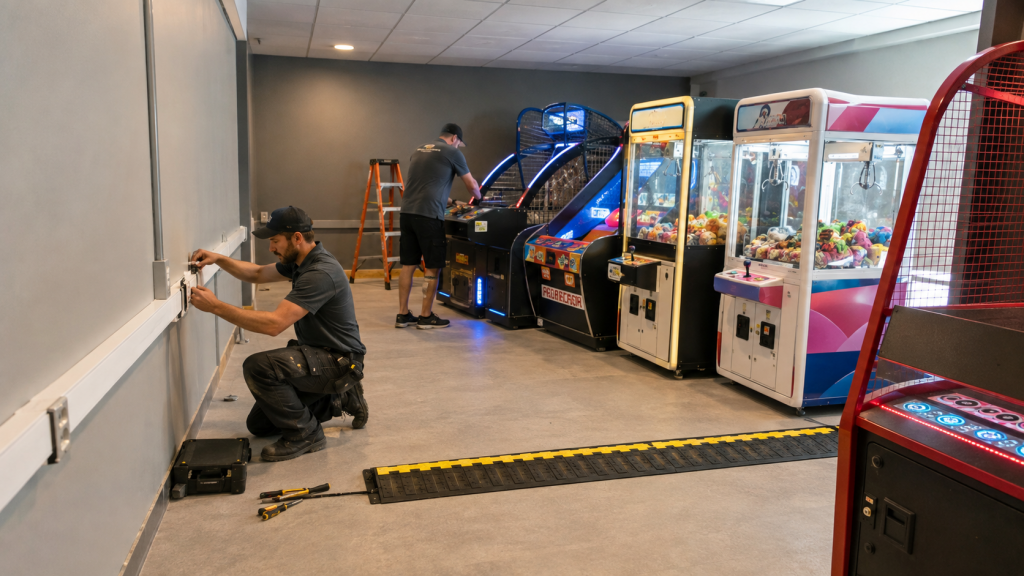
Consider Heat and Ventilation
Electrical equipment produces heat during operation. Screens, power supplies, mainboards, amplifiers, motors, fans, and motion systems can increase the temperature inside both the cabinet and the venue.
Do not block cooling vents or place machines too tightly together. The air-conditioning plan should consider the heat produced by operating equipment, especially during weekends and busy periods.
Staff should regularly inspect:
- Cooling fans
- Ventilation openings
- Dust accumulation
- Unusual odors
- Abnormal sounds
- Excessive cabinet temperature
Ventilation problems can shorten component life and increase the risk of unexpected shutdowns.
Complete the Arcade Electrical Setup Before Installation
The arcade electrical setup should be reviewed before delivery. Confirm that machine positions, outlet locations, cable routes, electrical zones, ventilation, delivery access, and maintenance space are ready.
The final site checklist should include:
- Equipment list approved
- Voltage and frequency confirmed
- Plug types checked
- Electrical zones assigned
- Outlet positions marked
- Cable routes prepared
- Ventilation reviewed
- Service access reserved
- Supplier manuals received
- Local electrical inspection arranged
The supplier should provide machine specifications and installation documents, while the electrician remains responsible for local circuit design, construction, protection, and approval.
Prepare the Venue for Reliable Long-Term Operation
A clear arcade power requirements plan reduces installation delays, supports safer maintenance, and helps prevent electrical problems after opening. The plan should reflect the actual equipment list, venue layout, local standards, and future expansion needs.
BLEE can provide machine voltage information, electrical specifications, plug configurations, equipment layouts, and installation documents for mixed entertainment projects. Final on-site work should always be completed and approved by qualified professionals.