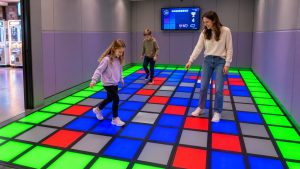
An interactive LED floor game turns a floor area into a physical challenge driven by changing colors and player movement. For indoor entertainment operators, its appeal goes beyond the illuminated tiles. The experience also depends on understandable rules, suitable challenges, and a room where people can play comfortably.
Friends can join a shared activity. Families can take turns. Company groups can include the challenge in a wider event. However, equipment selection is only one part of the plan. The following considerations help operators connect the attraction with their audience, layout, and daily workflow.
How the Color Challenge Works
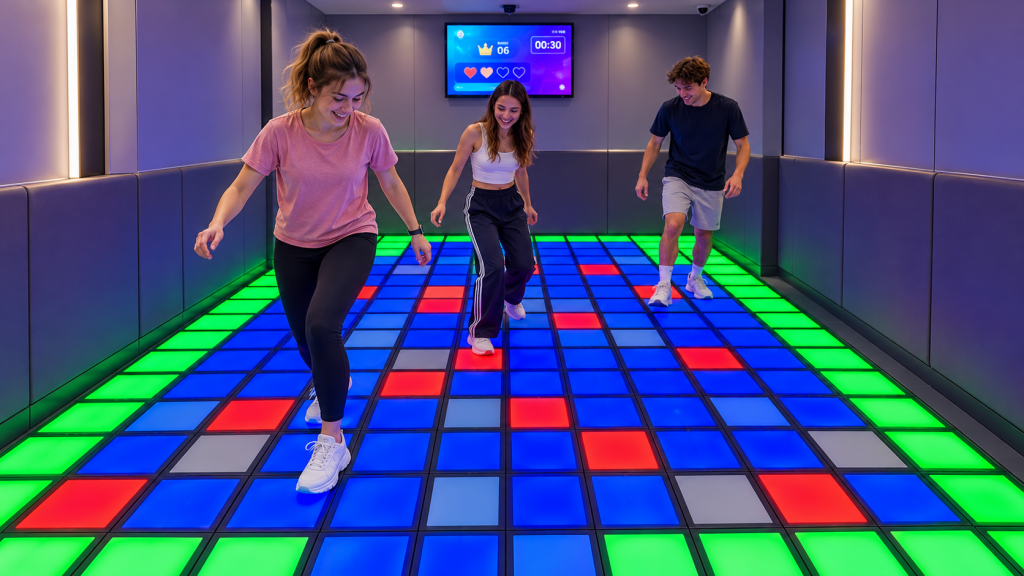
BLEE’s Mega Grid combines illuminated tiles with pressure sensing to register player actions. In its described gameplay, red areas represent hazards, green areas provide temporary refuge, and blue areas mark scoring targets. Players move across the grid while responding to the changing pattern. Bleegame
The challenge involves observing, deciding, and stepping into position. Therefore, introductory instructions should explain what each color means before visitors enter. A brief demonstration can show the difference between a scoring target and a hazard.
Explain the rules for the selected mode rather than assuming every visitor knows the format. An LED floor challenge becomes easier to follow when the instructions match the actual session.
Giving Groups a Shared Activity
Multiplayer floor games create opportunities for participants to communicate during play. One person may notice a target first. Another may remind a teammate to change position. These moments can make the experience part of a social visit. Bleegame
However, groups arrive with different expectations. Friends may enjoy comparing results, while families may prefer a relaxed introduction. Team-building organizers may prioritize participation over ranking.
Plan sessions around those differences. Select supported modes that suit the group, and keep competition optional where practical. A cooperative grid game should give players enough room to move while maintaining the permitted capacity. Spectators also need a clear place to watch.
Matching the Challenge to the Audience
Difficulty should be discussed alongside the intended visitor profile. A demanding sequence may appeal to experienced players but overwhelm newcomers.
Start by reviewing the available software settings and manufacturer guidance. Where supported, offer an introductory round before moving to a more demanding pattern. Also explain how the session ends and what the displayed result means.
Avoid treating every group in the same way. Age guidance, physical requirements, and player capacity should inform the activity plan. Clear expectations help visitors decide whether the experience suits them.
Planning Space around an LED Floor Game
When selecting an interactive LED floor game, measure the entire room rather than only the proposed tile area. The installation also needs suitable entry, exit, viewing, and service arrangements.
Entry and Waiting Positions
Keep waiting visitors outside the active surface. Position the entrance so arriving guests can receive instructions without blocking departing players. Bags and drinks should have a designated place away from the grid.
Visibility and Service Access
Players should see the floor signals and relevant display information clearly. Balance room lighting with tile visibility instead of making darkness the main design feature. In addition, confirm how staff will reach controls and access components for maintenance.
Making Daily Sessions Easier to Manage
A clear operating routine helps staff deliver a consistent introduction. Decide who starts each session, explains the rules, checks the playing area, and manages the next group.
Session planning should include changeover time. Visitors need to leave the room, collect belongings, and allow the next group to enter. Otherwise, a timetable based only on gameplay can become difficult to follow.
Before opening, use the supplier’s inspection and cleaning procedures. Staff should understand how to report an unresponsive tile or software issue. Also confirm the recommended footwear and participation guidance for the installed system.
Questions to Ask before Ordering
Compare the complete floor game system, including its software and support arrangements. Ask which game modes are included and how difficulty settings work. Confirm the permitted number of players for the proposed layout.
Request drawings that show the tile arrangement, room dimensions, and control positions. Installation requirements, power needs, and service access should be agreed before production.
Finally, ask about spare parts, troubleshooting, training, and software updates. These details help operators prepare for daily use. Discuss package activities and pricing separately, based on the venue’s own audience and operating costs.
Building a Complete Visitor Experience
The strongest plan connects gameplay with the way guests use the venue. Visitors should understand the challenge, find the entrance, and know where to wait. Staff should have a practical routine for running each session.
An interactive LED floor game can become a distinctive addition to an arcade, family entertainment center, or indoor activity venue. Explore BLEE Mega Grid and discuss your room layout, visitor profile, and preferred gameplay with BLEE. A considered plan gives the illuminated floor a clear role within the wider entertainment experience.