
Search Intent: Why Do Buyers Search for “Super Grid Game”?
People who search for “Super Grid game” are usually looking for an interactive, physical, technology-driven game room that can attract players and increase venue revenue. They may also use related terms such as LED floor game, interactive floor game, grid floor challenge, active game room, or interactive game equipment.
For commercial buyers, the real search intent is not only “what is this game?” They want to know how the system works, how much space it needs, whether it can fit an arcade or family entertainment center, how it compares with laser game or push game rooms, and whether it can generate good ROI. This guide answers those questions from a B2B venue planning perspective.
What Is a Super Grid Game?
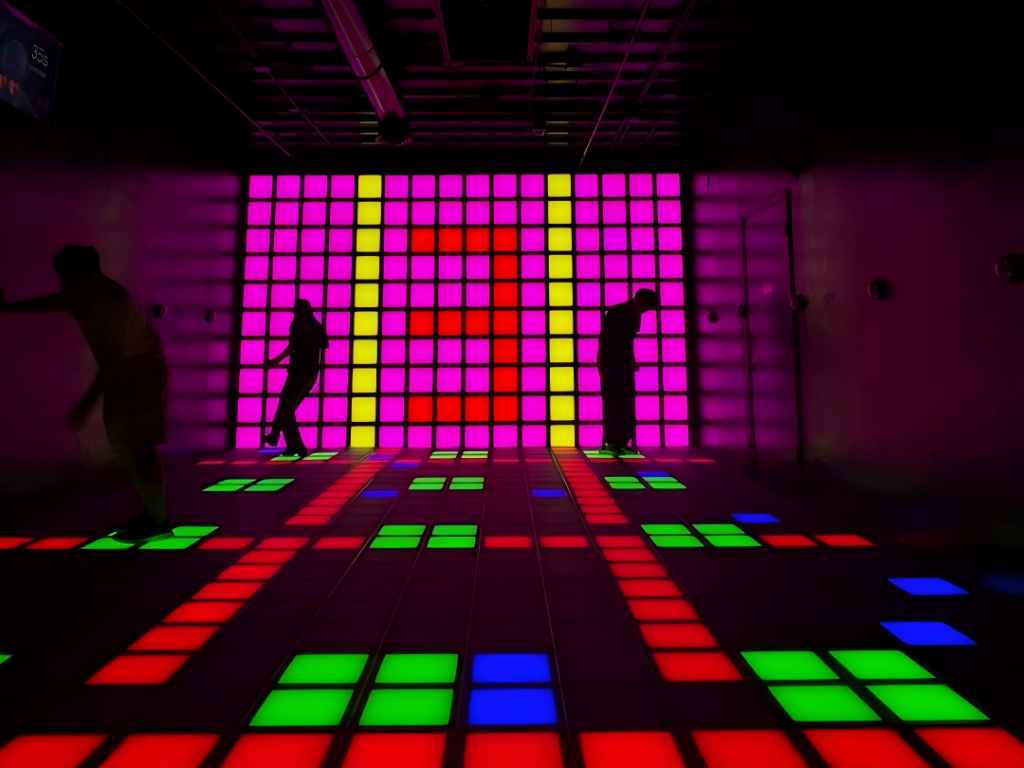
A Super Grid game is an interactive LED floor game where players step on, avoid, or follow illuminated floor tiles according to game rules. It is usually designed as a room-based physical challenge, combining light-up floor panels, sensors, game software, sound effects, timing systems, and scoring logic.
This type of product is also known as an LED floor game, interactive grid floor game, active gaming floor, or interactive floor challenge. In some entertainment venues, similar concepts may be used as part of a wider active game room system alongside laser game, push game, hide game, arena game, hoops game, and climbing game.
The main value of a Super Grid game is that it turns a simple floor area into a high-energy, replayable challenge. Players move, react, compete, and cooperate in a digital-physical environment.
How Does a Super Grid Game Work?
A Super Grid game works through a combination of LED floor tiles, pressure or touch sensors, control software, game modes, scoring logic, and safety flooring structure. When a player steps on a tile, the system detects the action and responds immediately with light, sound, score, or game progress.
A typical game process includes:
- Players enter the game room.
- The system selects a game mode or difficulty level.
- LED floor tiles light up in different colors.
- Players step on safe tiles, avoid danger tiles, or complete tasks.
- Sensors detect movement and foot placement.
- The system calculates scores, time, mistakes, and completion results.
- Players can replay to beat their own score or compete with others.
The key to a good LED floor game is response speed. If the floor tiles react quickly and the game rules are easy to understand, players can immediately enjoy the challenge without long instruction time.
What Are the Main Features of a Commercial LED Floor Game?
A commercial LED floor game should be designed for high-frequency public use. The core features are strong floor structure, fast sensor response, bright LED effects, multiple game modes, stable software, and safe operation.
Important features include:
- Touch-sensitive or pressure-sensitive LED floor tiles
- Multi-color light effects
- Fast response time
- Multiple difficulty levels
- Single-player and multiplayer modes
- Cooperative and competitive gameplay
- Scoring and timing system
- Durable commercial-grade structure
- Anti-slip surface design
- Easy maintenance access
- Custom room size and layout options
- Integration with other interactive game rooms
For venue operators, game variety is important. One physical room should not feel like a single-use attraction. A well-designed Super Grid game should support different game modes so players can return and experience new challenges.
Why Is a Super Grid Game Good for Commercial Venues?
A Super Grid game is valuable because it creates active, social, and repeatable entertainment. Unlike passive screen-based arcade games, players must move their bodies, react quickly, and coordinate with teammates. This makes the game suitable for families, teenagers, young adults, school groups, and corporate team-building events.
Commercial advantages include:
- Strong visual attraction from LED lighting
- High replay value through score competition
- Suitable for both children and adults
- Works well for group bookings and parties
- Supports active entertainment trends
- Helps venues create differentiated experiences
- Can be combined with other interactive game rooms
- Uses space efficiently compared with large mechanical rides
For investors, the main benefit is positioning. A Super Grid game can help a venue move beyond traditional arcade machines and become a more immersive, active entertainment destination.
What Is the ROI Potential of a Super Grid Game?
The ROI of a Super Grid game depends on venue traffic, ticket price, room capacity, session length, operating hours, and whether the game is sold as pay-per-play, group package, membership access, or party booking. The system works best when it is integrated into a broader interactive game room business model.
A simple ROI example:
| Factor | Example |
|---|---|
| Session price | US$5–US$15 per player |
| Players per session | 2–6 players |
| Sessions per day | 20 sessions |
| Daily revenue potential | Depends on price and occupancy |
| Main cost factors | Equipment, room buildout, rent, staff, maintenance |
| ROI driver | Repeat visits and group bookings |
For venues with strong traffic, ROI is often improved by bundling Super Grid with other games such as laser game, push game, hoops game, arena game, and climbing game. A multi-room interactive game package usually has higher perceived value than one standalone attraction.

Where Can a Super Grid Game Be Used?
A Super Grid game can be used in entertainment venues that want active, technology-based, and group-friendly attractions. It is especially suitable for places where customers are willing to pay for immersive challenges rather than only single arcade plays.
Common application scenarios include:
| Venue Type | Why It Works |
| Family entertainment centers | Adds active challenge and family participation |
| Arcades | Creates a premium interactive game zone |
| Trampoline parks | Matches physical activity positioning |
| Indoor amusement parks | Adds digital sports-style gameplay |
| Shopping malls | Attracts families, teenagers, and group visitors |
| School activity centers | Supports reaction, agility, and teamwork |
| Team-building venues | Good for cooperation and competition |
| Tourist attractions | Creates quick and memorable experiences |
| Sports entertainment centers | Fits active movement and challenge themes |
| Franchise entertainment stores | Easy to package with multiple game rooms |
For small venues, the game can be built as one compact LED floor room. For larger venues, it can be part of a full interactive game room lineup.
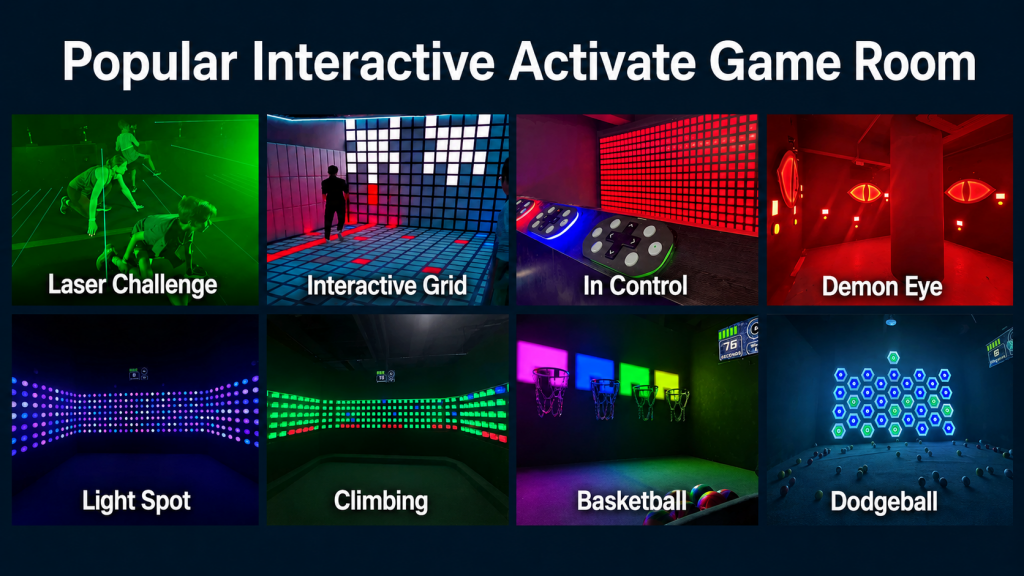
How Does a Super Grid Game Compare with Laser Game, Push Game and Other Interactive Games?
A Super Grid game focuses on footwork, reaction speed, movement control, and pattern recognition. Other interactive games may focus on different skills, such as aiming, hiding, climbing, throwing, pressing, or team strategy.
| Game Type | Main Player Action | Best Commercial Value |
| Super Grid Game / LED Floor Game | Step, avoid, react, move | High replay value and strong visual appeal |
| Laser Game | Dodge lasers or complete laser tasks | Immersive challenge and photo-friendly experience |
| Push Game | Press illuminated buttons quickly | Simple rules and fast reaction gameplay |
| Hide Game | Hide, seek, detect, or complete stealth tasks | Strong team and group engagement |
| Arena Game | Multi-task challenge in a larger room | Good for group packages and competitions |
| Hoops Game | Shoot balls into targets | Sports-style skill challenge |
| Climbing Game | Climb and react to lights or tasks | Physical challenge and active entertainment |
A strong interactive venue usually does not rely on one game only. The best strategy is to combine different challenge types so players use different skills and feel that each room offers a new experience.
How Should Investors Choose the Right Super Grid Game?
Investors should choose a Super Grid game based on venue size, customer type, room capacity, game variety, safety requirements, and long-term maintenance. The lowest price is not always the best choice if the system cannot support stable commercial operation.
Before buying, ask these questions:
- Is the LED floor tile strong enough for daily commercial use?
- How fast does the sensor respond?
- How many game modes are included?
- Can the room size be customized?
- Is the floor surface anti-slip and easy to clean?
- Can the system support group play?
- Is the software easy for staff to operate?
- Are spare parts available?
- Can the supplier provide layout planning?
- Can this game be combined with laser game, push game, hoops game, or climbing game?
For B2B buyers, supplier experience matters. A good supplier should understand not only the equipment, but also customer flow, room layout, business model, and operation planning.
What Space and Layout Requirements Should Operators Consider?
A Super Grid game does not need a very large space, but it does need a safe, clear, and well-planned room. The space should allow players to move quickly without hitting walls, doors, or other players. Ceiling height, ventilation, lighting control, and entry/exit flow should also be considered.
A basic layout should include:
- LED floor game area
- Clear player entry and exit
- Safety buffer around active tiles
- Wall or screen for instructions
- Staff access for maintenance
- Control system location
- Viewing area or waiting zone if needed
- Non-slip flooring around the room
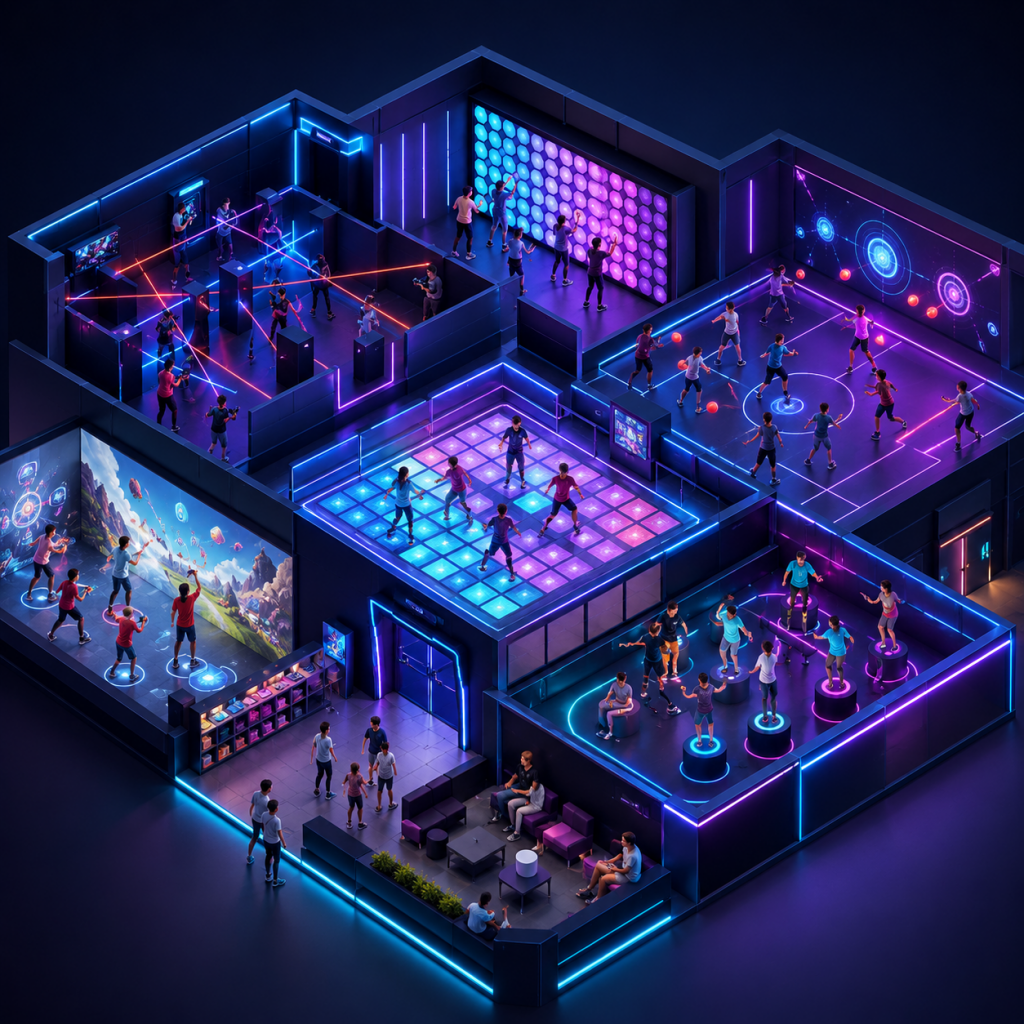
For multi-room entertainment projects, Super Grid should be placed near other high-energy games. This helps create a clear “active challenge zone” and improves customer understanding of the venue.
What Does a Successful Super Grid Game Project Look Like?
A successful Super Grid game project usually combines strong game design, good location, safe layout, and smart operation. For example, an FEC may install a Super Grid room next to laser game and push game rooms, then sell them as a 30-minute or 60-minute interactive challenge package.
In this model, customers do not see the Super Grid game as a single machine. They see it as part of a complete active entertainment experience. Groups can rotate between different rooms, compare scores, and return for higher-level challenges.
A successful setup may include:
- One LED floor game room as a visual anchor
- Several related interactive game rooms nearby
- Clear rules and difficulty levels
- Group package pricing
- Score-based replay incentives
- Staff training and regular maintenance
- Strong lighting and photo-friendly design
For commercial venues, the lesson is clear: the game performs best when equipment, layout, pricing, and operation work together.
Why Choose BLEE for Super Grid Game and Interactive Game Solutions?
BLEE provides amusement activate game equipment and one-stop arcade solutions for family entertainment centers, indoor amusement parks, arcade venues, shopping mall entertainment zones, and active game projects. For buyers planning a Super Grid game, BLEE can help evaluate room size, game combination, layout design, and suitable equipment configuration.
BLEE’s interactive game solutions can include LED floor game, laser game, push game, hide game, arena game, hoops game, climbing game, and other active entertainment products. This allows investors to build a complete interactive game room package instead of purchasing isolated equipment.
For B2B projects, the value of working with an experienced supplier is practical planning. The goal is not only to buy one game, but to create a venue that can attract players, manage customer flow, support repeat visits, and generate long-term commercial value.
FAQ About Super Grid Game
What is a Super Grid game?
A Super Grid game is an interactive LED floor game where players step on, avoid, or follow illuminated floor tiles to complete challenges. It combines LED floor panels, sensors, software, sound, scoring, and physical movement.
Is a Super Grid game the same as an LED floor game?
In many commercial contexts, Super Grid game and LED floor game describe a similar type of interactive floor-based challenge. The term may vary by supplier, venue, or game design.
How does an LED floor game detect player movement?
An LED floor game usually detects movement through touch-sensitive or pressure-sensitive tiles. When a player steps on a tile, the system records the action and responds with lights, score changes, or game progress.
What venues are suitable for a Super Grid game?
Suitable venues include family entertainment centers, arcades, indoor amusement parks, trampoline parks, shopping malls, school activity centers, team-building venues, tourist attractions, and active entertainment stores.
Can a Super Grid game be used with other interactive games?
Yes. A Super Grid game can be combined with laser game, push game, hide game, arena game, hoops game, climbing game, and other interactive rooms to create a full active entertainment package.
Is a Super Grid game suitable for children and adults?
Yes. The game can be designed with different difficulty levels, making it suitable for children, teenagers, adults, families, and team groups.
What should I check before buying a Super Grid game?
Buyers should check tile durability, sensor response, game modes, room size, safety design, anti-slip surface, software stability, spare parts support, and supplier project experience.
How can a Super Grid game improve ROI?
It improves ROI by increasing replay value, supporting group bookings, creating social competition, and working as part of a multi-room interactive entertainment package.
Does the game require staff operation?
It depends on the venue model. Some systems can run with simple staff control, while larger interactive venues may need staff to manage sessions, explain rules, and monitor safety.
Can BLEE customize a Super Grid game room?
Yes. BLEE can support project-based customization, including room layout, game combination, visual style, equipment configuration, and integration with other interactive game rooms.
Conclusion
A Super Grid game is a commercial LED floor game that combines digital lighting, physical movement, scoring, and teamwork. It is suitable for venues that want more active, immersive, and replayable entertainment than traditional arcade machines alone.
For investors, the main value is not only the game itself. The real value comes from choosing the right room size, placing it in the right venue, combining it with other interactive games, and creating a clear business model around group play and repeat visits.
If you are planning an interactive game room, arcade center, FEC, or active entertainment project, BLEE can help you evaluate the space, recommend suitable game combinations, and provide a one-stop solution for your commercial venue.