
What Is an Activate Game Business?
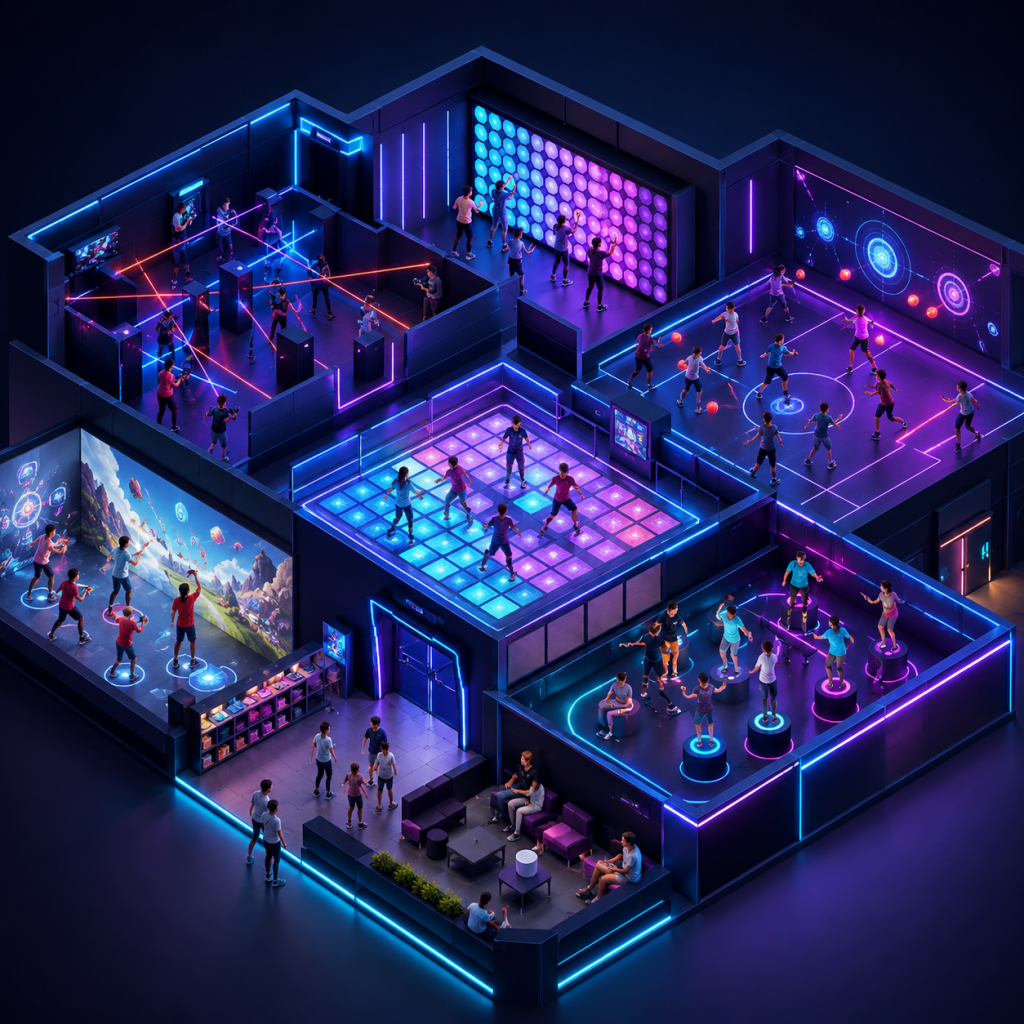
An Activate Game business is an indoor active entertainment venue built around multiple interactive game rooms. Players enter different challenge rooms, complete missions, earn scores, and move between games as individuals or teams.
The concept combines arcade gaming, escape-room style challenges, sports movement, LED lighting, digital scoring, and team competition. Instead of standing in front of one machine, players become part of the game environment.
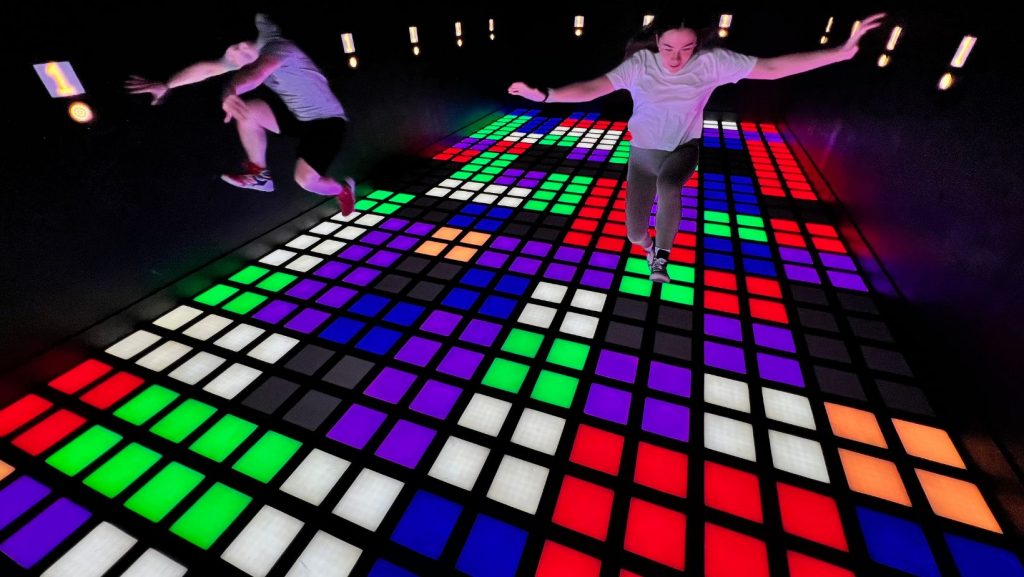
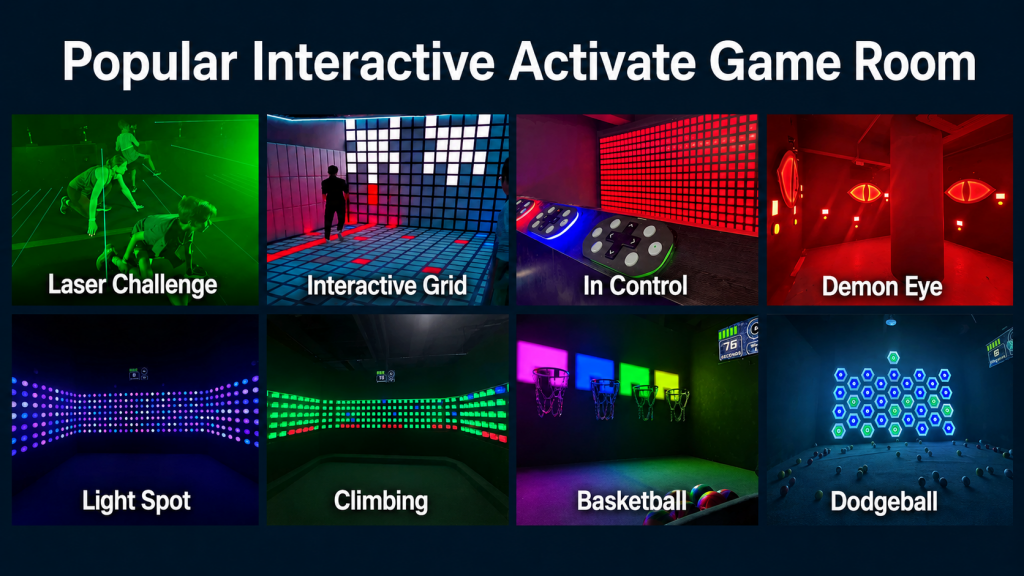
Typical rooms may include LED Floor Game, Laser Game, Push Game, Hide Game, Arena Game, Hoops Game, Climbing Game, and Light Flash Game. Each room offers a different challenge, such as stepping, dodging, pressing, hiding, climbing, shooting, or reacting to lights.
For operators, the business is not just selling one play. It is selling a time-based active entertainment experience with high replay value.
How Does an Activate Game Venue Work?
An Activate Game venue usually works through time-based admission or multi-room passes. Customers book a session, enter the venue, choose different rooms, complete challenges, and compare scores with friends or teammates.
The core system includes interactive equipment, sensors, lighting effects, control software, scoring displays, room structures, and staff operation. Each game room has its own rules, but the customer experience should feel simple and smooth.
A typical customer journey may look like this:
- Customers arrive and check in.
- Staff explain safety rules and session time.
- Players enter different game rooms.
- The system tracks scores and performance.
- Players repeat rooms to improve their results.
- Groups compare scores and share the experience.
- Customers may return for higher levels, parties, or team events.
The best venues make every room easy to understand within a few seconds. Simple rules, clear lighting, and instant feedback are critical for repeat play.
What Equipment Do You Need to Start an Interactive Business?
To start an Activate Game business, you need multiple interactive challenge rooms rather than one single machine. The exact combination depends on your budget, venue size, customer type, and target business model.
Common equipment options include:
| Game Room | Main Player Action | Reference Area | Reference Equipment Cost |
|---|---|---|---|
| LED Floor Grid Game | Step, avoid, react | 25㎡ | US$5,000 |
| Laser Game | Dodge and complete laser tasks | 25㎡ | US$4,500 |
| Push Game | Press light-up buttons quickly | 20㎡ | US$2,300 |
| Hide Game | Hide, detect, and complete missions | 20㎡ | US$3,800 |
| Laser Game | Compact laser challenge | 20㎡ | US$4,500 |
| Arena Game | Multi-task group challenge | 15㎡ | US$4,000 |
| Hoops Game | Shoot into interactive targets | 20㎡ | US$2,800 |
| Climbing Game | Climb and react to tasks | 25㎡ | US$4,500 |
| Light Flash Game | React to flashing lights | 15㎡ | US$2,800 |
Based on these references, a full 9-room equipment package costs about US$34,200 and requires about 185㎡ of game-room area before adding reception, corridors, storage, waiting area, and staff space.
How Much Does It Cost to Start an Activate Game Business?
The equipment cost for an Activate Game business can start from a small package of around US$7,900 and increase to about US$34,200 for a fuller 9-room equipment lineup, based on the room references above.
However, equipment cost is only one part of the total investment. A complete project also needs site renovation, room construction, electrical work, flooring, wall protection, decoration, lighting, signage, air conditioning, shipping, installation, taxes, staff training, and marketing.
A practical budget should include:
- Interactive game equipment
- Room construction and decoration
- Electrical and network work
- Flooring and wall materials
- Safety padding or protective structure
- Lighting and sound system
- Reception and waiting area
- Shipping and customs
- Installation and technical support
- Staff training
- Launch marketing
For first-time investors, the safer strategy is to start with a focused room package and leave space for future expansion.
What Are the Best Starter Packages for Different Budgets?
Not every investor needs a full multi-room venue from day one. A starter package can reduce investment risk and help test local customer demand.
| Package Type | Suggested Rooms | Game Area | Equipment Cost |
| Starter Package | Push Game + Hoops Game + Light Flash Game | 55㎡ | US$7,900 |
| Standard Package | LED Floor Game + Laser Game + Push Game + Hoops Game + Light Flash Game | 105㎡ | US$17,400 |
| Growth Package | LED Floor Game + Laser Game + Push Game + Hide Game + Arena Game + Hoops Game | 125㎡ | US$22,400 |
| Full Challenge Package | All 9 reference rooms | 185㎡ | US$34,200 |
The Starter Package is suitable for compact entertainment zones. The Standard Package is better for small FECs, mall entertainment stores, or arcade upgrades. The Growth and Full Challenge packages are more suitable for dedicated active gaming venues.
A balanced first phase should include at least one visually impressive room, one simple reaction room, and one group-friendly sports or challenge room.
How Much Space Do You Need for an Activate Game Venue?
The game rooms themselves may require 55㎡ to 185㎡, depending on the selected package. But the total venue size should be larger because operators also need circulation space, reception, waiting area, storage, staff access, and safety clearance.
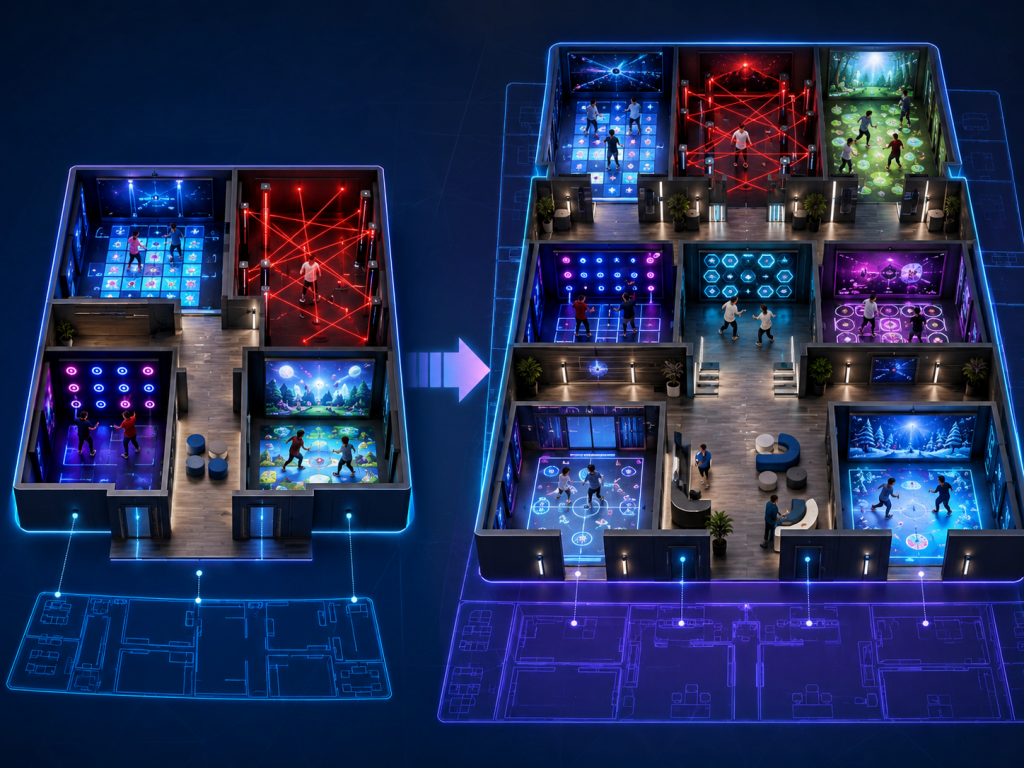
A practical planning method is to separate the project into four zones:
| Zone | Function |
| Game room area | Core revenue space |
| Reception area | Ticketing, check-in, waivers, customer service |
| Waiting area | Customer flow, group waiting, parent rest |
| Operation area | Storage, equipment access, maintenance, staff passage |
For a compact project, investors may start with around 80–120㎡ total space. For a stronger multi-room venue, 150–250㎡ or more is usually easier to operate. Larger venues can support more games, better customer flow, and higher group capacity.
Where Is the Best Location for This Business?
An Activate Game business works best in locations with strong foot traffic, group visitors, and customers willing to pay for active entertainment. The venue should be easy to access, visible, safe, and suitable for repeat visits.
Good locations include:
- Shopping malls
- Family entertainment centers
- Indoor amusement parks
- Trampoline parks
- Arcade centers
- Tourist attractions
- Sports entertainment centers
- Youth activity centers
- University or residential commercial areas
- Team-building venues
Shopping malls can provide visibility and impulse traffic. FECs can provide family and party customers. Trampoline parks and sports venues already attract active players. Tourist areas can support short-session entertainment and group packages.
The best site is not always the cheapest. A low-rent location with weak traffic may perform worse than a higher-rent location with strong customer flow.
How Can an Activate Game Business Make Money?
An Activate Game business can make money through more than one revenue channel. This is one of its strongest advantages compared with single arcade machines.
Common revenue models include:
- Single-session tickets
- Timed access passes
- Multi-room challenge packages
- Birthday party bookings
- School activity packages
- Corporate team-building events
- Family memberships
- Weekend premium pricing
- Private venue rental
- Drinks, snacks, and merchandise
The most important revenue driver is repeat play. Players return when the venue has multiple game modes, different difficulty levels, team rankings, visible scores, seasonal challenges, and social sharing opportunities.
Operators should avoid selling the project only as a novelty attraction. It should be positioned as an active game experience that customers can revisit with different friends, teams, and goals.
What ROI Can You Expect from an Activate Game Business?
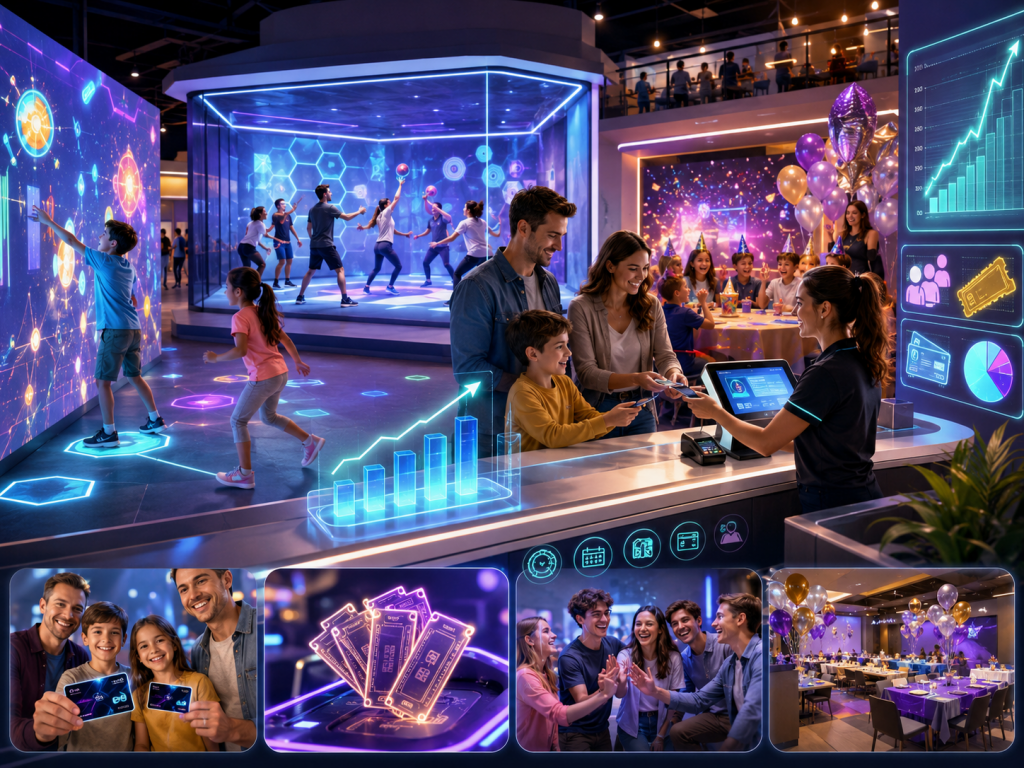
ROI depends on location, rent, ticket price, occupancy rate, session length, labor cost, equipment cost, and marketing. A simple model can help investors understand the revenue logic.
Example model:
| Factor | Example |
| Average ticket price | US$8 per player |
| Average players per session | 4 players |
| Sessions per day | 20 sessions |
| Daily gross revenue | US$640 |
| Monthly gross revenue | About US$19,200 |
This is only a reference model, not a guaranteed result. Actual revenue depends on customer traffic, local spending power, operating hours, room capacity, and how well the venue sells group packages.
ROI improves when the venue can attract birthday parties, school groups, corporate events, and repeat members. A multi-room model can also increase perceived value because customers feel they are buying a complete experience, not just one short game.
How Is This Business Different from a Traditional Arcade?
A traditional arcade usually depends on individual machines such as claw machines, racing games, basketball machines, shooting games, and redemption games. An Activate Game venue depends more on room-based experiences, team play, timed sessions, and physical movement.
| Business Type | Main Revenue Logic | Customer Experience |
| Traditional arcade | Pay-per-machine play | Many individual machines |
| Claw machine store | Prize-winning impulse play | Plush, blind box, gift attraction |
| VR venue | Immersive digital content | Headset-based experience |
| Escape room | Puzzle and story solving | Longer themed sessions |
| Activate Game venue | Active multi-room challenges | Movement, teamwork, scoring, replay |
The Activate Game model is stronger for group play and active entertainment. A traditional arcade is usually easier to scale with machines. Many operators can combine both models to create a more complete entertainment venue.
How Should You Choose the Right Game Combination?
The best game combination should match your target audience, available space, and ticket strategy. For most projects, the game lineup should include visual attraction, simple reaction games, physical movement, and team-based competition.
A recommended first-stage combination is:
- LED Floor Grid Game for visual impact and social media appeal
- Laser Game for immersive challenge
- Push Game for low-cost, easy-to-understand play
- Hoops Game for sports-style competition
- Light Flash Game for fast turnover and compact space
- Arena Game for group challenge value
For family venues, choose safer and easier games first. For teenagers and young adults, add stronger competition and physical challenges. For corporate events, include more team-based rooms that require communication and cooperation.
How Do You Choose a Reliable Supplier?
An Activate Game business is a project, not a simple product purchase. A reliable supplier should understand equipment, layout, software, installation, safety, customer flow, and commercial operation.
Before choosing a supplier, ask:
- Can they provide multiple game room types?
- Can they customize room size and layout?
- Do they understand FEC and arcade projects?
- Can they provide drawings or layout suggestions?
- Are spare parts available?
- Is the software stable and easy to use?
- Can the system support group play?
- Is installation guidance available?
- Can they support long-term technical communication?
- Do they offer a complete solution instead of isolated products?
For project customers, supplier planning ability is often more important than the lowest equipment price. A poor layout can reduce customer flow even if the equipment itself is attractive.
What Does a Successful Activate Game Project Look Like?
A successful project usually has a clear target audience, balanced game mix, good location, simple ticket model, strong visual identity, and efficient customer flow.
For example, a 100–125㎡ game-room area can include LED Floor Game, Laser Game, Push Game, Hoops Game, Light Flash Game, and Arena Game. This combination gives customers several different actions: stepping, dodging, pressing, shooting, reacting, and teamwork.
A strong project should also include:
- Clear entrance and check-in process
- Easy room navigation
- Simple safety rules
- Visible scores and rankings
- Staff monitoring
- Good waiting experience
- Photo-friendly lighting
- Membership or replay incentives
- Birthday and group package options
The project succeeds when customers understand the value quickly and feel there is a reason to return.
Why Choose BLEE for an Activate Game Business?
BLEE provides commercial amusement equipment and one-stop arcade solutions for global entertainment operators. For Activate Game projects, BLEE can help investors select suitable interactive rooms, estimate equipment budgets, plan game combinations, and design practical venue layouts.
BLEE’s interactive game solutions can include LED floor game, laser game, push game, hide game, arena game, hoops game, climbing game, light flash game, and other active entertainment equipment.
For project customers, BLEE’s value is not only equipment supply. The goal is to help operators build an entertainment venue that matches the space, budget, customer group, and business model.
FAQ About Starting an Activate Game Business
What is an Activate Game business?
An Activate Game business is an indoor active gaming venue made of multiple interactive challenge rooms. Players complete tasks through movement, lights, sensors, buttons, lasers, scoring systems, and teamwork.
Is BLEE affiliated with Activate?
No. In this article, “Activate Game” is used to describe a type of interactive active gaming business model. BLEE is not claiming official affiliation with the Activate brand.
How much does it cost to start an Activate Game business?
Based on reference equipment prices, a starter package can cost about US$7,900, while a full 9-room equipment lineup can cost about US$34,200. Total project cost will be higher after construction, shipping, installation, rent, and operating costs.
How much space do I need?
A small starter package may need about 55㎡ of game-room area. A full 9-room package may need about 185㎡ before adding reception, corridors, waiting area, storage, and staff access.
Which game rooms should I start with?
A good first-stage setup can include LED Floor Game, Laser Game, Push Game, Hoops Game, and Light Flash Game. This creates a balanced mix of visual attraction, reaction play, movement, and sports challenge.
Is this business suitable for shopping malls?
Yes. Shopping malls can be suitable because they provide foot traffic, families, teenagers, and group visitors. The venue should be visible, easy to access, and designed with good customer flow.
Can this business generate repeat customers?
Yes. Repeat visits can be created through scoring, difficulty levels, team rankings, memberships, seasonal challenges, birthday packages, and group competitions.
What is the biggest risk for new investors?
The biggest risks are weak location, poor layout, unclear business model, insufficient marketing, and choosing equipment without considering long-term operation.
Can BLEE provide a complete solution?
Yes. BLEE can support interactive game room equipment selection, game combination planning, layout suggestions, customization, and project communication based on the customer’s venue and budget.
Conclusion
Starting an Activate Game business is a strong opportunity for operators who want to build an active, social, and technology-driven entertainment venue. The model works best when multiple game rooms are combined into a clear customer experience with timed access, group play, scoring, and replay incentives.
Based on reference equipment prices, investors can start with a compact package from about US$7,900 or build a larger multi-room project with equipment cost around US$34,200. The final investment will depend on venue size, decoration, construction, shipping, installation, local labor, and operation strategy.
If you are planning an interactive active gaming venue, BLEE can help you choose suitable games, estimate equipment budgets, and design a practical project solution for your market.